BIC_DEU_EN 2025
-
-
2025 Universal Registration Document
- Messages from BIC’s Chief Executive Officer and from BIC’s Chair of the Board of Directors
- General presentation of the Group
Messages from BIC’s Chief Executive Officer and from BIC’s Chair of the Board of Directors
-
Group presentation, Outlook, and strategy
1.1.History
Marcel Bich acquires a factory in Clichy, France, and starts a Writing Instruments business with his partner Édouard Buffard.
Launch of the “Pointe BIC®” in France, a revolutionary improved version of the Ball Pen invented by Hungarian Laslo Biro.
Acquisition of the Waterman Pen company in the United States. Expansion into Africa and the Middle East.
Diversification into the leisure industry through its subsidiary, BIC Sport, specializing in windsurf boards.
Acquisition of Tipp-Ex, the leading European correction products brand, and Sheaffer, a high-end brand in Writing Instruments.
Mario Guevara becomes Chief Executive Officer of BIC in May.
Acquisition of PIMACO, Brazil’s leading manufacturer and distributor of adhesive labels.
Opening of a new shaver packaging facility in Mexico.
Acquisition of Antalis Promotional Products (Sequana Group).
Acquisition of 40% Cello Group, a leading stationery group in India.
Acquisition of Norwood Promotional Products, a U.S. leader in calendars and promotional products.
Disposals of the PIMACO B-to-B division in Brazil and the REVA Peg-Making business in Australia.
Acquisition of Angstrom Power Incorporated, a company specialized in portable fuel cell technology.
- –Launch of BIC® Education, an educational solution for elementary schools, combining handwriting and digital technology.
- –Acquisition of land in Nantong, China (130 km North of Shanghai) to build a lighter production facility.
Mario Guevara retires from his position as Chief Executive Officer. The Board of Directors decides to combine the roles of Chairman and Chief Executive Officer and appoints Bruno Bich as Chairman and Chief Executive Officer.
- –Sale of BIC Graphic North America and Asian Sourcing operations to HIG Capital.
- –Opening of the new Writing Instruments facility in Samer (France).
- –Bruno Bich retires from his position as CEO. The Board of Directors decides to split the roles of Chairman and Chief Executive Officer.
- –Pierre Vareille is appointed Chairman of the Board and Gonzalve Bich becomes Chief Executive Officer.
- –Filing by BIC of an infringement complaint with the European Commission for lack of surveillance of non-compliant Lighters that are either imported into or sold in France and Germany.
- –Acquisition of manufacturing facilities of Haco Industries Ltd. in Kenya and its distribution activities of Stationery, Lighters, and Shavers.
- –Disposal of BIC Sport, BIC’s water sports subsidiary, to Tahé Outdoors and discontinuation of its Writing Instruments manufacturing operations in Vannes.
- –Inauguration of BIC’s East Africa Facility in Kasarani, Nairobi.
- –BIC filed a complaint with the European Ombudsman claiming maladministration by the European Commission of the infringement procedure initiated in 2010 against the Netherlands due to their lack of actions to impose lighters safety standards compliance.
- –Completion of the acquisition of Lucky Stationary in Nigeria (LSNL).
- –Acquisition of Djeep, a French lighter company, one of the leading manufacturers of quality Lighters, reflecting BIC’s strategy of greater premiumization and personalization.
- –Acquisition of Rocketbook, a reusable notebook brand in the United States.
- –Completion of the sale of BIC’s headquarters in Clichy (France) and BIC Technologies sites for 175 million euros.
- –Completion of the divestiture of the Brazilian adhesive label business, PIMACO, to Grupo CCRR for 40 million Brazilian Real.
- –Acquisition of Inkbox®, the leading brand of semi-permanent tattoos.
- –Acquisition of AMI (Advanced Magnetic Interaction), a French start-up pioneer in augmented interaction technology.
- –Appointment of Nikos Koumettis as Chair of the Board.
- –Acquisition of Tattly®, a leading decal brand based in the U.S.
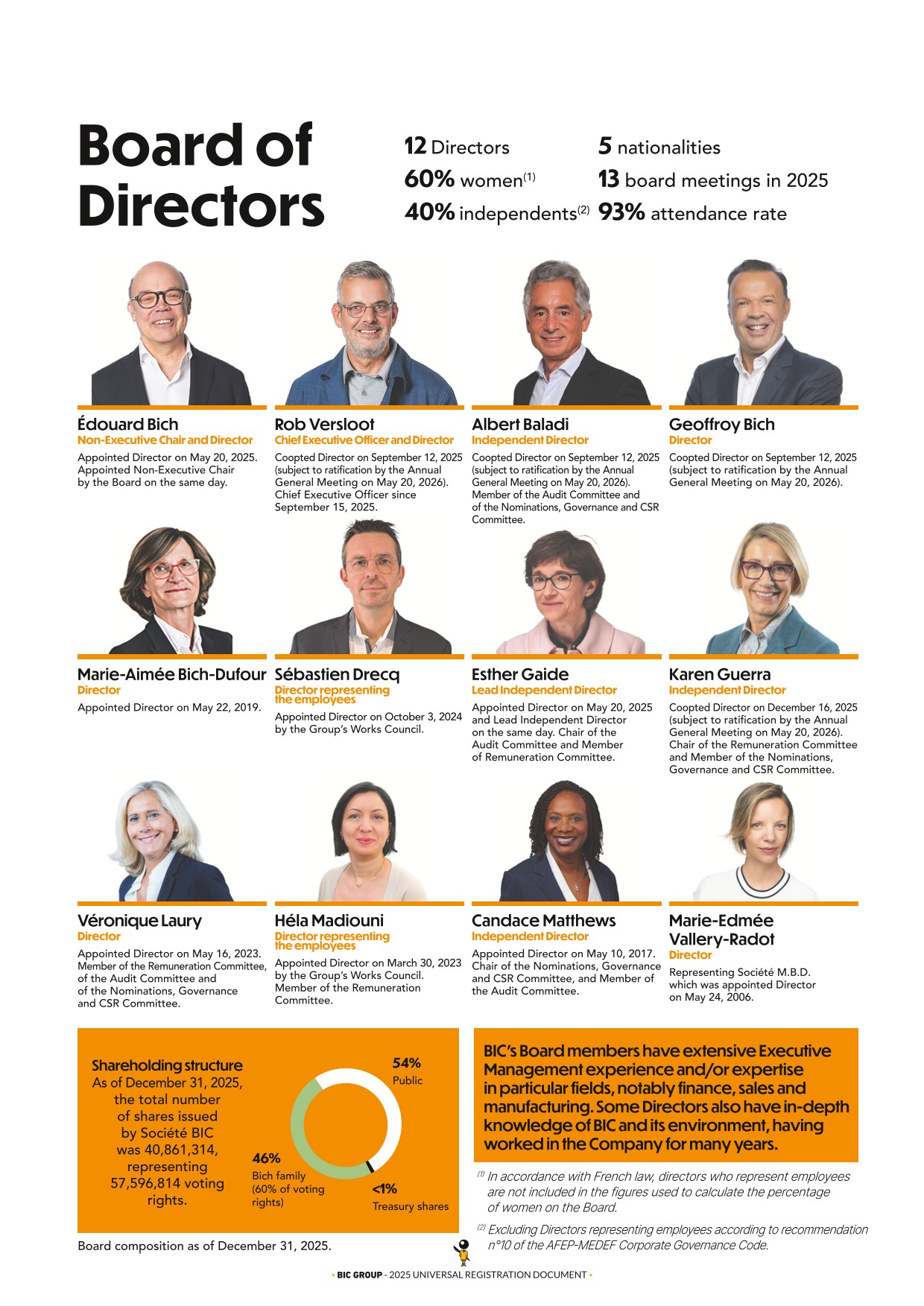
- –Héla Madiouni appointed as Director representing the employees for the Board of Directors, replacing Inna Kostuk.
- –Véronique Laury and Carole Callebaut-Piwnica were appointed as Directors.
- –Pascal Chevallier appointed as Director representing the employees to the Board of Directors, replacing Vincent Bedhome.
- –Sébastien Drecq was appointed as Director representing the employees to the Board of Directors of Société BIC, replacing Pascal Chevallier who resigned on August 31st, 2024.
- –BIC announced preparations for CEO Gonzalve Bich succession.
- –BIC announced the acquisition of Tangle Teezer, a premium detangling haircare company.
May:
Following the decisions from the Shareholder’s meeting on May 20, 2025, the Board has:
- –Appointed Édouard Bich as Non-Executive Chair of the Board, replacing Nikos Koumettis.
- –Appointed Esther Gaide as Lead Independent Director, Chair of the Audit Committee and member of the Remuneration Committee, replacing Maëlys Castella.
- –Acknowledged the appointment of Marie-Edmée Vallery-Radot, as permanent representative of Société M.B.D. on the Board of Directors, replacing Édouard Bich.
June:
- –Appointment of Rob Versloot as Chief Executive Officer, effective September 15th, 2025.
- –Chad Spooner, Chief Financial Officer, decided to step down from his position effective July 11th, 2025.
September:
The Board of Directors co-opted three new Directors:
- –Rob Versloot, BIC’s new CEO, replacing Gonzalve Bich as Director.
- –Albert Baladi, replacing Jake Schwartz as Independent Director and also appointed him member of the Audit Committee and of the Nominations, Governance and CSR Committee.
- –Geoffroy Bich, replacing Timothée Bich as Director.
The ratification of these co-optations will be proposed at the Shareholder’s meeting on May 20, 2026.
October:
Announced sale of BIC’s Cello activities in India.
November:
Appointment of Grégory Lambertie as Chief Financial and Digital Officer, effective January 5th, 2026.
December:
- –Announced discontinuation of Rocketbook and Skin Creative activities (Inkbox & Tattly).
- –The Board of Directors co-opted Karen Guerra as Independent Director, replacing Carole Callebaut-Piwnica, and appointed her as Chair of the Remuneration Committee and member of the Nominations, Governance and CSR Committee. The ratification of this co-optation will be proposed at the Shareholder’s meeting on May 20, 2026.
-
1.2.Key figures
1.2.12025 Key financial figures
Net sales
net sales by division
Earnings Before Interest and Taxes
(EBIT)Adjusted Earnings Before Interest and Taxes
(aDJUSTED EBIT)(1)EBIT by division
(in million euros)(2)
Adjusted EBIT BY DIVISION
(in million euros) (3)
EBIT margin
Adjusted EBIT margin
Net income group share
Group Earnings per share (EPS)
Sales volume trends
Production volume trends
Net sales by geography
(in million euros)
2024
2025
% as reported
% on a comparative basis
% at constant currency
Group
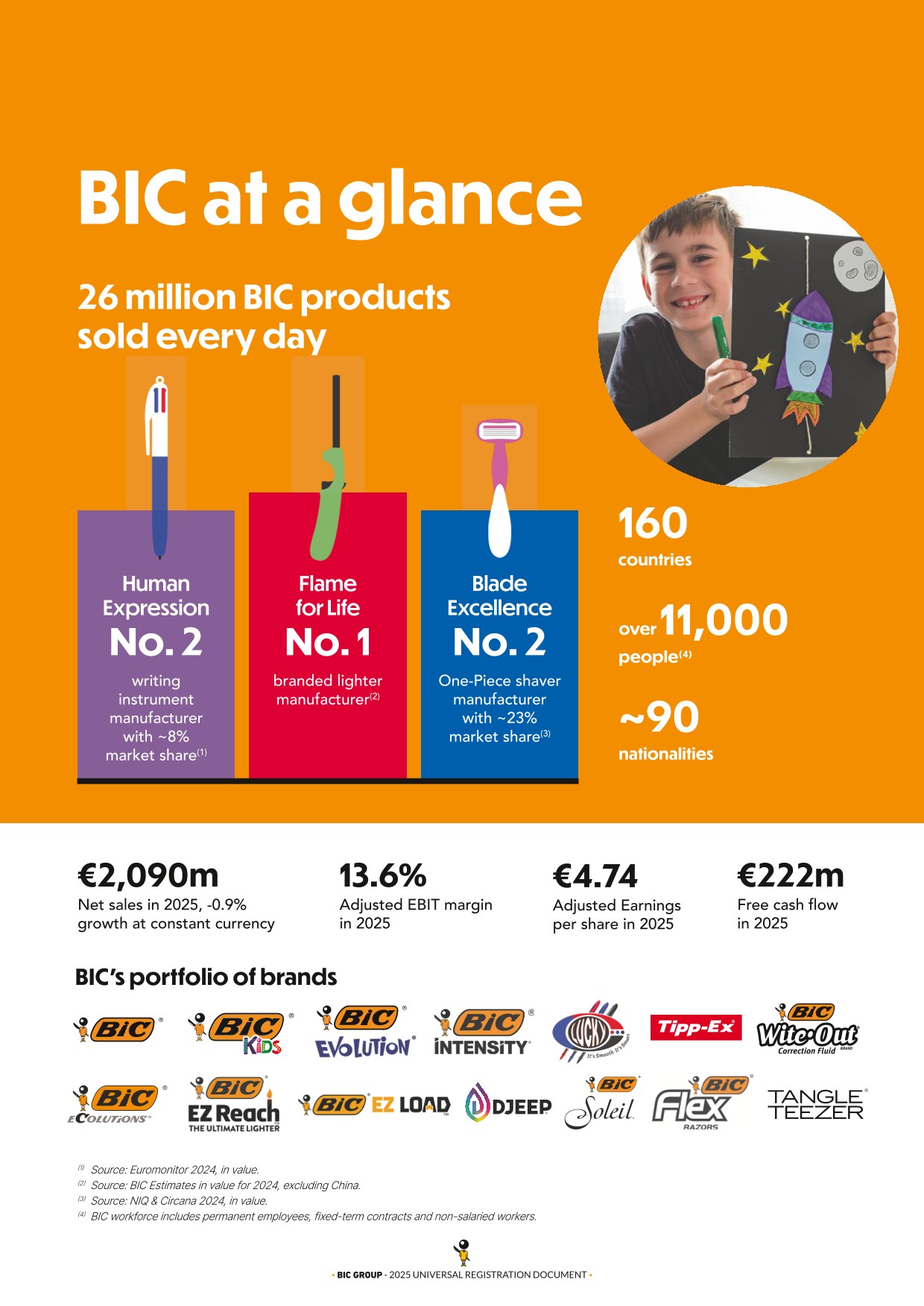
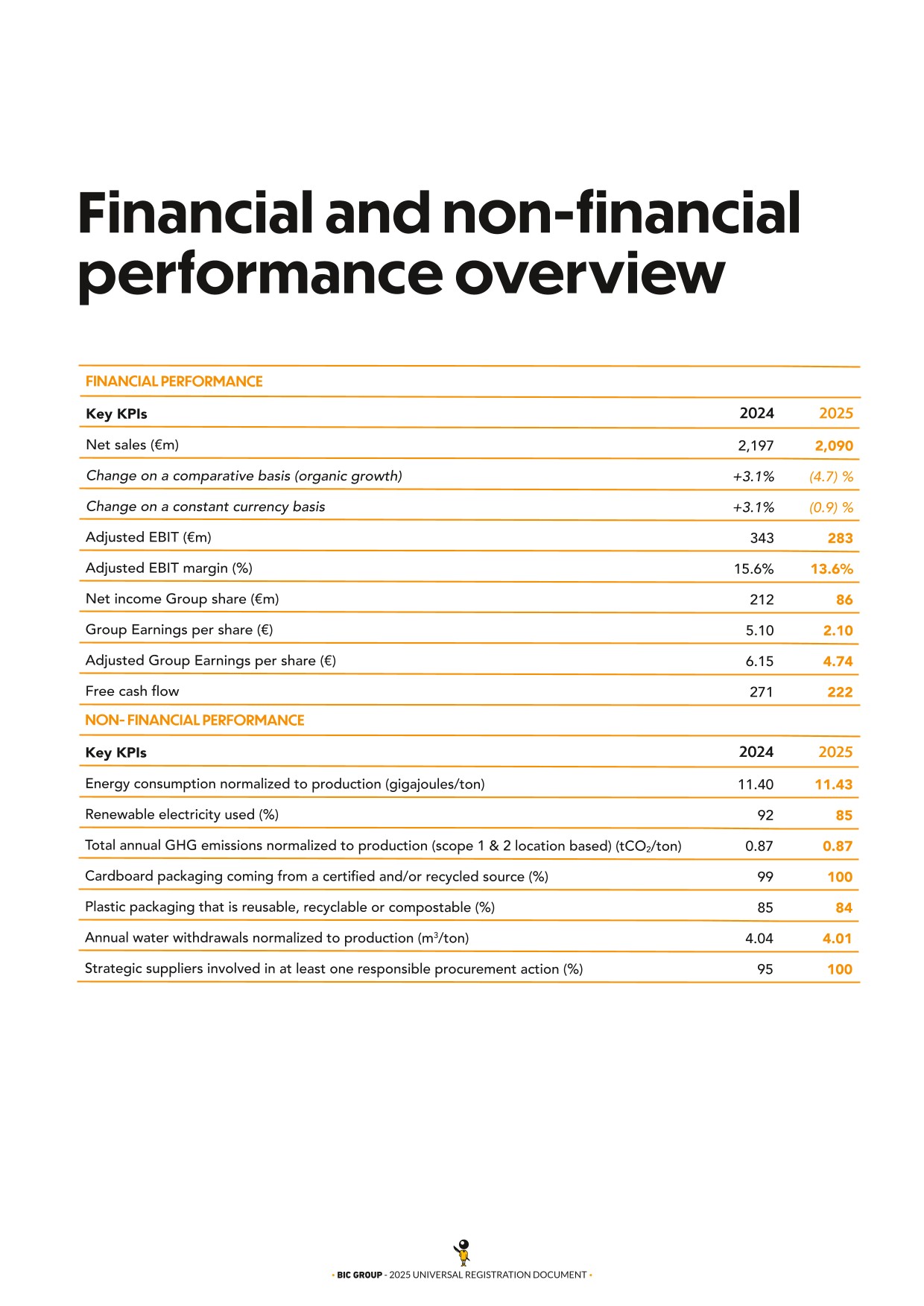
2,197
2,090
(4.8) %
(4.7) %
(0.9) %
Europe
698
736
+5.5%
(1.6) %
+6.0%
North America
819
750
(8.4) %
(8.7) %
(4.2) %
Latin America
425
365
(14.0) %
(4.4) %
(4.4) %
Middle East and Africa
162
166
+2.0%
+3.9%
+3.9%
Asia & Oceania
93
73
(21.3) %
(10.0) %
(15.8) %
Condensed profit and loss statement
(in million euros)
2024
2025
Net Sales
2,197
2,090
Cost of goods
1,094
1,071
Gross Profit
1,103
1,019
Operating and other expenses
813
863
Earnings Before Interest and Taxes (EBIT)
290
156
Finance revenue/costs
8
(17)
Income before tax
298
139
Income tax expense
(86)
(53)
Net Income Group Share
212
86
Group Earnings per share (in euros)
5.10
2.10
Average number of shares outstanding (net of treasury shares)
41,561,522
41,111,812
MAIN balance sheet ITEMS
(in million euros)
December 31, 2024
December 31, 2025
Shareholders’ equity
1,793
1,665
Current borrowings
167
164
Non-current borrowings
168
154
Cash and cash equivalents – Assets
456
461
Other current financial assets and derivative instruments
6
18
Net cash position
189
234
Goodwill and intangible assets
558
423
Total balance sheet(4)
2,839
2,613
Condensed cash flow statement
(in million euros)
2024
2025
Cash flow from operations
471
400
(Increase)/Decrease in net current working capital
18
7
Other cash flow from operations
(131)
(98)
Net cash from operating activities
358
309
Net cash from investing activities
(284)
(60)
Net cash from financing activities
(73)
(223)
Net Free Cash Flow net of bank overdrafts
1
26
Closing cash and cash equivalents net of bank overdrafts
456
461
-
1.3.Strategy and objectives
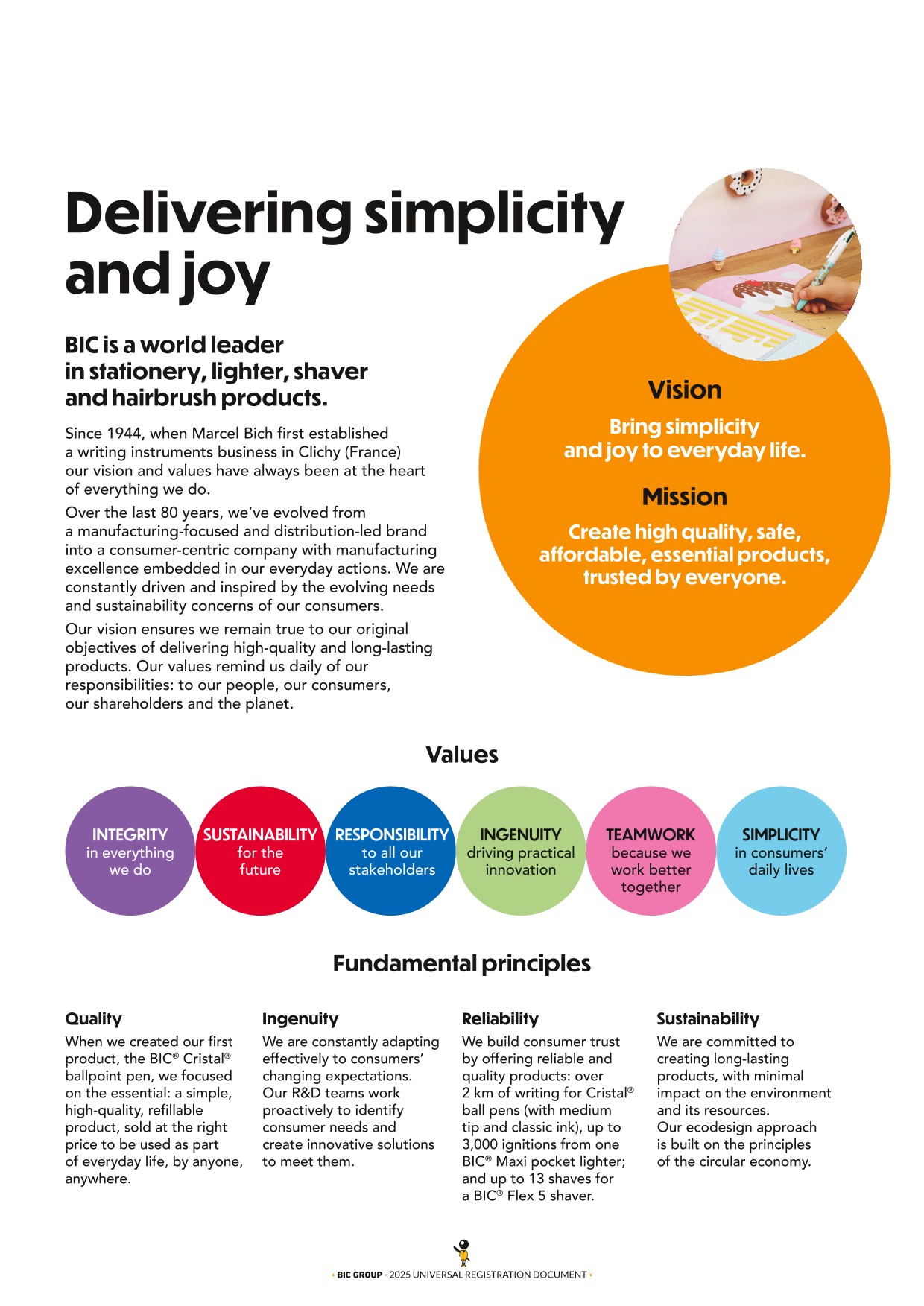
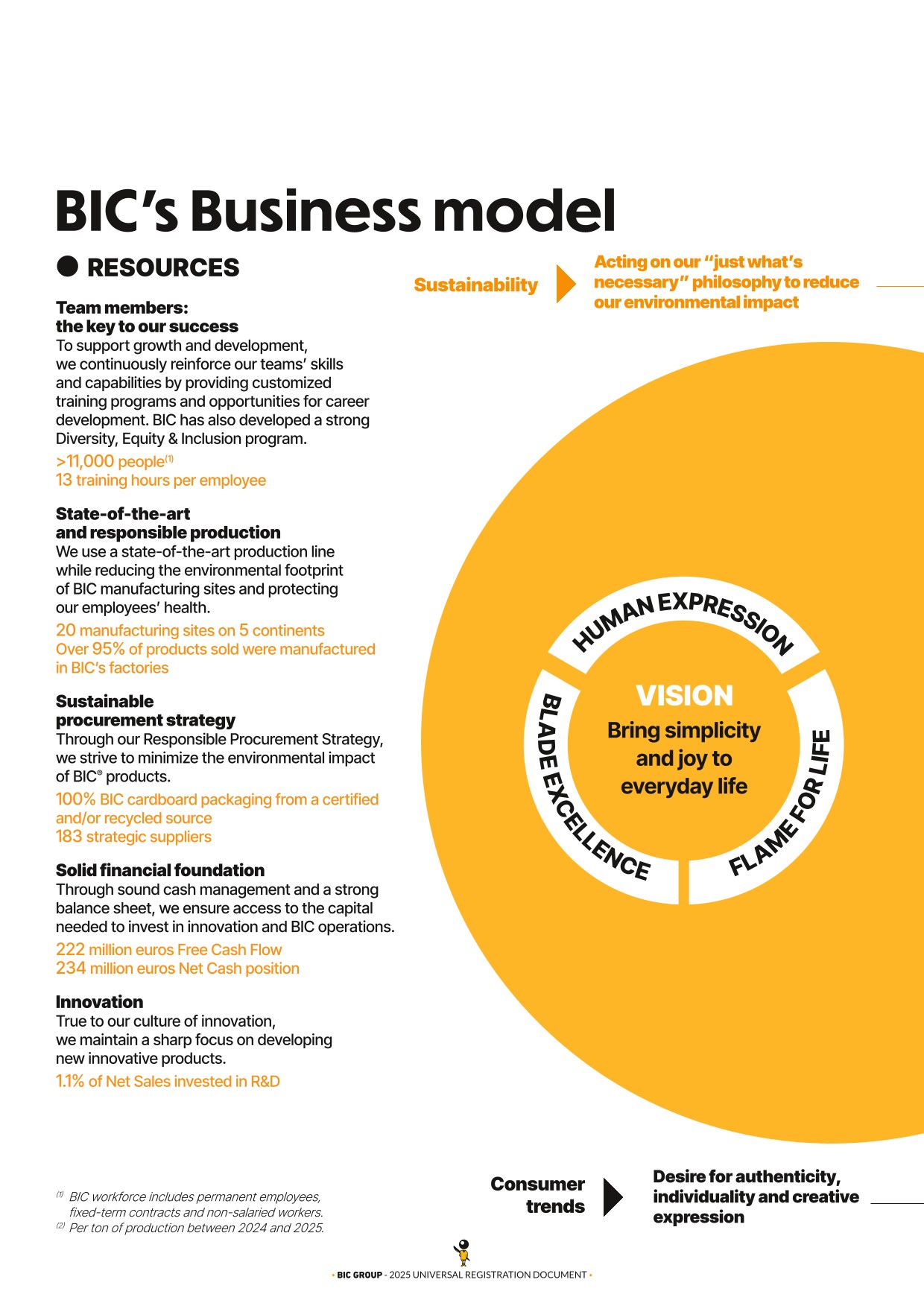
For 80 years, BIC has met consumer needs and desires with high quality, simple, and affordable products and has become one of the most recognized global consumer goods brands. Our vision is to bring simplicity and joy to everyday life, as we seek to create a sense of ease and delight in the millions of moments that make up the human experience.
Over time, the Group faced rapidly-changing industries and consumption trends affecting its three categories, as consumers habits and their interaction with brands continuously evolved. BIC’s mission is to offer high quality products to consumers everywhere and meet their fast-changing needs.
1.3.1BIC Horizon Strategic Plan (2020-2025)
BIC’s Horizon strategy was launched in November 2020 to transform of BIC’s business and create the innovative products and services with more focus on consumer needs and sustainability. As part of this transformation, BIC reframed its three core categories through a heightened consumer lens:
- ●in Stationery, BIC evolved its focus to “Human Expression”, responding to shifting consumer habits towards more creativity and focus on value-added segments while optimizing its product portfolio;
- ●in Lighters, BIC expanded to “Flame for Life”, focusing on all consumer lighting occasions, including those non-related to tobacco, and driving towards a more balanced model between volume and value;
- ●in Shavers, BIC decided to reinforce its portfolio with consumer-driven and sustainable value-added products while capitalizing on innovation, its research and development as well as its manufacturing capabilities. The category evolved to become “Blade Excellence” and the Group created a B2B business – BIC Blade-Tech – which offers high quality shaving solutions to other brands.
-
1.4.Business presentation
BIC is one of the leading players in the stationery, lighter, shaver and hairbrushes markets. Guided by our long-term vision, our mission is to provide high-quality, affordable products to consumers everywhere. This consistent focus has helped make BIC one of the world’s most recognized consumer products goods companies, with products sold in more than 160 countries.
1.4.1Business presentation by division
1.4.1.1Human Expression division
BIC’s historical Stationery category evolved towards “Human Expression” under the Horizon strategy to go beyond core Writing Instruments into Creative Expression by developing innovative products that strengthen the Group's portfolio.
Since the launch of the BIC® Cristal® pen in 1950, BIC has continuously diversified its Stationery product range through more added-value products and innovative launches and with an increased focus on sustainability, simplicity and joy. To name a few, BIC launched in the recent years BIC® Break-Resistant, a mechanical pencil with lead that is 75% stronger than the leading U.S. competitor, BIC® Ecolutions Gel Pen made of 78% ocean-bound plastic or the Intensity coloring product range.
At the end of 2025, BIC’s product portfolio included writing, marking, correction, coloring and drawing instruments.
BIC’s markets and positioning
Core Writing & Coloring Instruments Market
BIC’s historical market Writing and Coloring Instruments reached 19.8 billion(7) euros in 2024, with a projected CAGR of 3.6% from 2024-2028(8) driven by rising demand in emerging markets such as Mexico and Brazil. In parallel, innovation and premiumization are set to drive growth in developed countries. Despite its fragmentation among leading players (including BIC, Newell Brands, and Pilot) BIC maintained the #2 global position in 2024, with around 8% market share, leveraging its strong presence across both mature and developing regions.
Over the years, BIC strengthened its presence in Writing Instruments and Coloring’s markets through innovative launches enabling market share gains in key countries, whether it be in core writing instruments or in added-value segments like coloring.
Breakdown of the Writing Instruments market
By region
By product segment
main market leaders (9)
BIC’s market share by segment
BIC’s Market share by region - 2025
- ●Brazil: Nielsen YTD December 2025. Estimated market coverage of ~15%, excluding Crayons;
- ●South Africa: IRI YTD December 2025. Estimated market coverage of ~33%;
- ●Western Europe: GFK 6 countries YTD December 2025. Estimated market coverage of ~65%;
- ●United States: NPD YTD December 2025. Estimated market coverage of ~90%., excluding coloring
The Arts and Crafts market
The Arts and Crafts market is a large market experiencing mid-single-digit growth (estimated at 11.9 billion euros in 2024)(10). The market is expected to grow by 4.8% (CAGR 2024 – 2028) attributed to increased demand of both kids’ and teens’ market as well as from adults asking for more creativity. Kids’ crafts account for more than 50% of the total including a variety of sub-segments such as Finger-painting, Watercolors, Kits, Crafting Accessories, Modeling Clay and Slime.
BIC’s Brand Portfolio in Human Expression
BIC was built on the amazing power of its Brand, which is one of the world’s most popular household names. Over time, other brands have been added to our portfolio, most of them using the power of the BIC brand to drive attractiveness and consumer engagement, including Tipp-ex®, Wite-Out®, BIC® Evolution®, BIC® Kids, BIC® Intensity®, BIC® ECOlutions™ or Lucky Stationery. BIC offers a diversified panorama of brands, where consumers can each see themselves reflected and find their “own” brand favorites.
BIC’s Distribution Channels
Echoing its historical strategy “A BIC seen is a BIC sold”, BIC’s mission is to offer products available to consumers every day and everywhere.
BIC products are sold through a comprehensive range of channels worldwide acting as omnichannel specialist both offline and online. Products can be found in retail mass-market distributors, eCommerce channels (pure players, market places, B2B and B2C omnichannel retailers), traditional stores and Office Product suppliers (through contract or office superstores).
In the retail mass-market channel, Back-to-School season continues to serve as a pivotal commercial window, driving heightened consumer engagement. During this period, BIC deploys an extensive portfolio of school and collegiate products, supported by impactful in-store displays including highly recognizable public-space activations for axample its iconic billboards across France.
Office and school supply companies remain an essential distribution channel for the Group, where BIC maintains a solid market position grounded in the brand’s reputation for quality, reliability, and strong value for money, notably important for businesses, government agencies, and schools.
In e-Commerce BIC has leading positions in Stationery online in key markets such as France, the United Kingdom and the United States.
1.4.1.2Flame for Life division
BIC’s historical Lighter category evolved to “Flame for Life” under the Horizon strategy, focusing on all lighting occasions. Flame for Life aims to balance volume with a more value-driven model powered by trade-ups, personalization and innovation, to respond to changing consumer trends.
BIC’s market and positioning
The worldwide pocket lighter market is estimated at 17.1 billion units (€6.7 billion in value)(11). BIC is one of the world leaders and holds 15% of market share in volume (excluding China).
BIC’s lighter category shows contrasted dynamics across regions, with mature markets driven by value and premiumization, while developing regions continue to contribute to volume growth. Beyond its current size, the market remains attractive thanks to several pools of growth, including the ability to capture incremental growth across adjacent lighting needs traditionally fulfilled by matches, as well as the expansion of new or growing usage occasions beyond traditional tobacco.
Breakdown of the global pocket lighter market in 2024
By region (Excluding china)
Market leaders in volume (excluding CHINa)(12)
BIC’s leadership position and market shares
The competitive advantages supporting BIC’s leadership position include safety, quality, strong brand awareness, automated and highly efficient manufacturing processes, and a solid distribution network.
BIC® pocket lighter market share by KEY regions
Safety and quality, key differentiators for BIC
BIC is well-known for providing safe, high quality and compliant lighters to consumers worldwide. A lighter is a plastic reservoir filled with pressurized gas that is lit by a flame. It can present a real danger if it is not designed and manufactured properly. The consequences can be severe and are often unknown to consumers. International Safety Standards protect consumers from unsafe lighters.
- ●international lighter safety standard ISO 9994, which sets out the basic safety requirements for a lighter. ISO 9994 is mandatory in major markets such as Canada (1989), Russia (2000), Brazil (2002), South Africa (2002), Argentina (2003), Thailand (2003), Mexico (2004), South Korea (2005), the 27 European Union member states (2006), Japan (2011), Indonesia (2011) and Turkey (2012);
- ●child-resistant requirements. A child-resistant lighter is purposely modified to make it more difficult to operate by children. Under this standard, the basic requirement is that a lighter cannot be operated by at least 85% of children under 51 months. Child-resistant legislation is mandatory in major countries such as the U.S. (1994), Canada (1995), Australia (1997), New Zealand (1999), the 27 members of the European Union (2006), Japan (2011), South Korea (2012) and Mexico (2016).
BIC has always been an advocate for enhanced lighter safety and quality. BIC® lighters comply with even more stringent safety, quality and performance requirements.
Towards a more value-driven model through trade-up and innovation
BIC offers a wide range of high-quality pocket and utility lighters manufactured with the highest safety standards.
BIC’s shift to balance more volume with value in its Lighter business started years ago and is supported by recent developments such as:
- ●the acquisition of Djeep in June 2020, which strengthened BIC’s portfolio in the added-value segment of decorated and premium lighters;
- ●the launch of BIC® EZ Reach™, BIC’s first pocket utility lighter, in July 2020, in the US. The EZ Reach™ lighter was also launched into most major markets such as Europe and Latin America;
- ●the launch in 2024 of the BIC® EZ Load Lighter, BIC’s first-ever reloadable lighter, which can light up to 15,000 flames.
BIC’s Distribution Channels
BIC® lighters are sold through traditional distribution channels (such as convenience stores and tobacconists), retail mass-market distribution stores, and online in the United States. Online and offline, in-store visibility is key to driving impulse purchases, and part of BIC’s historical strategy “A BIC seen is a BIC sold”.
Traditional trade is the primary strategic focus for BIC, as it represents the most important part of the lighter market. This channel concentrates the majority of value creation on pocket lighters, since products are more valorised and benefit from important impulse dynamics. However, it is also where competitive pressure is increasing.
To succeed in traditional trade, the shop itself becomes as a strategic asset, maximizing visibility through efficient routes-to-market, full distribution, and tailored customer and consumer programs. BIC leverages a wide range of decorated pocket lighters, addressing everyday needs while reinforcing impulse purchases at point of sale.
In Modern Trade, BIC’s strategy is built on relentless visibility and multi-location presence in-store, notably at checkout as well as in affinity aisles such as candles and barbecue, to support functional usage occasions.
1.4.1.3Blade Excellence division
BIC’s shaver category evolved to Blade Excellence division under the Horizon strategy and focuses on reinforcing its one-piece business with consumer-driven and sustainable value-added products while capitalizing on our advanced R&D and manufacturing capabilities.
BIC’s markets and positioning
The wet shave market was about 12.9 billion euros in 2024 and accounted for around 49% of the hair removal segment(13) in value. The 2024-2029 CAGR for the total Wet-Shave market is estimated at +4.2%(14).
Global wet shave market
By region
By product segment
Market leaders
The Wet-Shave market is split into three product segments: double-edge, one-piece and refillable. The global landscape is dominated by three legacy brands (Gillette, BIC®, Edgewell). On the highly competitive environment of the one-piece and refillable segments, growth is mostly driven by innovative products which offer improved performance and added features. A constant ability to innovate is key to maintain a leadership position. With that objective in recent years, BIC has made the shift towards premiumization to gain market share on value-added segments, while keeping BIC’s strength in offering products at the right value.
BIC’s market share in the non-refillable shavers segment
BIC is the #3 worldwide player, with almost 7%(15) of the total wet shave segment. In the One-Piece segment, BIC ranks #2 worldwide with a 23% market share (16). The Group holds leadership positions in Europe where it recently became #2, as well as in the United States and in Latin America.
- ●United States: Estimated market coverage of ~ 75%.
- ●Brazil: Estimated market coverage of ~ 65%.
- ●France: Estimated market coverage of ~ 80%.
- ●Mexico: Estimated market coverage of ~ 65%.
- ●United Kingdom: Estimated market coverage of ~ 40%.
BIC’s product portfolio aiming for more innovative and sustainable products
In the 1970s, BIC revolutionized wet shaving when it launched the first one-piece shaver: the single blade “classic”.
Over the last decade, BIC has focused its innovation, sales and marketing efforts on the high performance three, four, and five-blade sub-segments, offering thus a complete range of female and male products such as:
- ●for Men: BIC® Comfort 3®, BIC® Flex range, and BIC® Flex Hybrid (refillable) range;
- ●for Women: BIC® Soleil range including : BIC® Soleil Escape; BIC® Soleil Glide.
BIC also innovates with new products centered on sustainability and tailored to consumer evolving trends. As such, BIC launched:
- ●an innovative hybrid shaver range in Europe in 2021 made with recycled plastic handles and sold with recyclable packaging;
- ●BIC® Click Soleil 5 in 2022: a razor for women with a handle made from 40% recycled material and co-developed with the raw material supplier Avient;
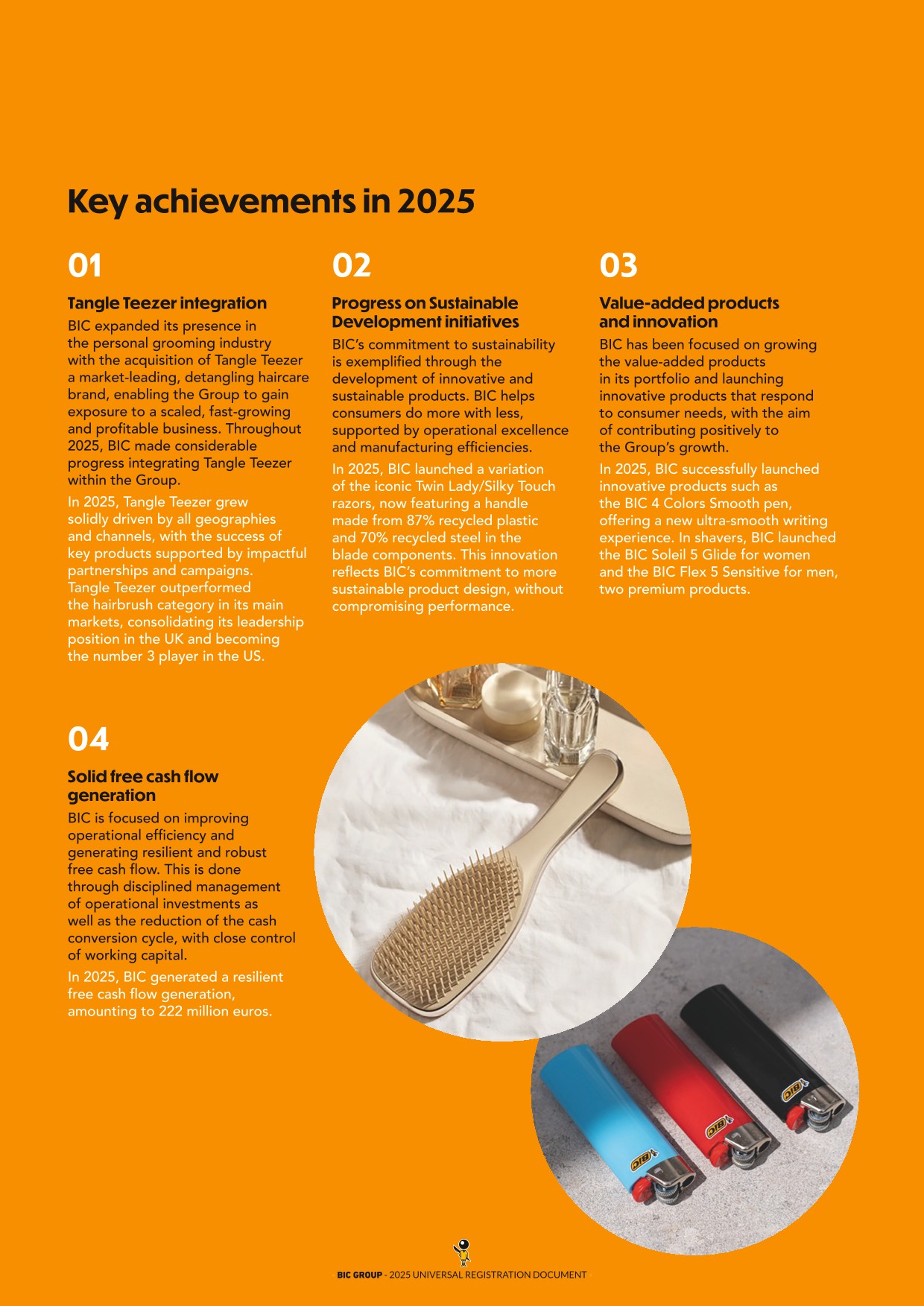
- ●A variation of the iconic Twin Lady/Silky Touch razor in 2025 featuring a handle made from 87% recycled plastic, 70% recycled steel in the blade components and with the thickness of the pouch reduced.
BIC Blade-Tech
BIC Blade Tech is a B2B business created as part of the Horizon Plan in 2020, aimed at leveraging BIC's leadership position and manufacturing excellence by powering other brands in the personal grooming industry. BIC Blade Tech offers a large variety of customizable products, from components (like cutting-edge blade heads and a diverse range of razor handles) to turnkey services (like packaged finished products). BIC Blade Tech is focused on delivering high-quality, tailored shaving solutions to meet customers' needs.
Tangle Teezer
At the end of 2024, BIC expanded its presence in the personal grooming industry with the acquisition of Tangle Teezer a market-leading, detangling haircare brand, enabling the Group to gain exposure to a scaled, fast-growing and profitable business. Throughout 2025, BIC made considerable progress integrating Tangle Teezer into BIC under the Blade Excellence division. Moreover, Tangle Teezer contributed significantly to the performance of the Blade Excellence division in 2025, delivering solid double-digit growth, notably due to distribution gains, reflecting both brand momentum and effective execution.
Other products
-
Risk factors and management
- Introduction
- 2.1. Main risks and risk assessment
- 2.2. Description and mitigation of main risk factors
- 2.3. Risk Management and Internal Control Procedures implemented by the Company and Insurance
Introduction
BIC maintains a proactive approach to identify, assess, mitigate, monitor and manage key risks that could impact our:
- ●team members, customers, Shareholders’ interests, assets, environment or reputation;
- ●ability to achieve our targets and strategy;
- ●ability to stay true to our values; and
- ●confirmed ability to comply with laws and regulations in addition to our Code of Conduct.
The assessment of the main risks considers the control measures implemented to reduce the risk (net or residual risk).
The risk factors below regard matters that could have an adverse effect, potentially material, on our business, financial condition, results of operations and cash flows. Additional risks and uncertainties not currently known to us or that we currently deem to be immaterial may also have a material adverse effect on our business, financial condition, results of operations and cash flows.
BIC continues to take measures to mitigate the risks as described in section 2.2 Description and Mitigation of Main Risk Factors, 2.3.4 Insurance – Coverage of Risks, and chapter 3.
-
2.1.Main risks and risk assessment
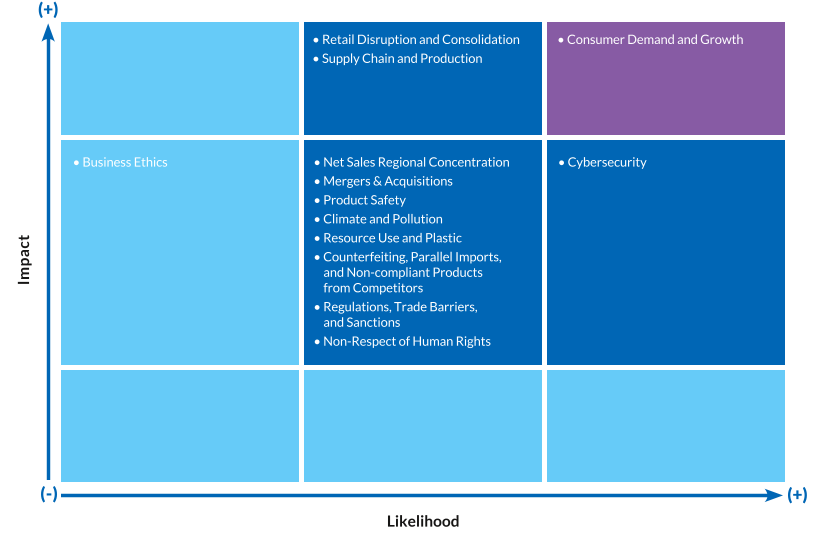
Risk Category
Risk Type
Risk Rating (a)
Low
Medium
High
Industrial and Commercial
Consumer Demand and Growth (b)
X
Retail Disruption and Consolidation (b)
X
Supply Chain and Production (b)
X
Cybersecurity (b)
X
Net Sales Regional Concentration
X
Mergers & Acquisitions
X
Product Safety
X
Environmental
Climate and Pollution
X
Resource Use and Plastic
X
Intellectual, Brand and Image
Counterfeiting, Parallel Imports, and Non-compliant Products from Competition
X
Legal and Regulatory
Regulations, Trade Barriers, and Sanctions
X
Business Ethics
X
Social and Human
Non-Respect of Human Rights
X
- (a)Risk Rating is the product of Impact x Likelihood.
- (b)Most material risks.
Geopolitical Landscape
-
2.2.Description and mitigation of main risk factors
Consumer Demand and Growth
BIC is exposed to changing consumer trends, preferences and needs impacting all three categories – Human Expression, Flame for Life and Blade Excellence. Global consumer trends may include:
- ●declining consumer confidence due to global economic uncertainty;
- ●growth in digital writing technology;
- ●reduced tobacco use or switch to e-cigarettes;
- ●changing hair removal habits and trends.
Risk Rating: High
Potential Impact on BIC:
- ●a lack of viable responses to the underlying risk situation would impact sales and profitability;
- ●changing consumer habits impacting BIC’s three categories might result in:
- ●a shift to digital versus Stationery, lower spending and shift to private labels,
- ●lower tobacco consumption and e-cigarettes impacting Lighters use,
- ●less frequent Shaver purchasing due to facial hair trends.
Examples of Risk Mitigation:
- ●focus Research & Development (R&D) on product innovations and brand positioning to address changes in consumer demand and needs (e.g. decoration strategy to tap into the Coloring whitespace, Lighter decors, personalization of products);
- ●adopt a Consumer-lens to category expansion (e.g. EZ ReachTM Lighter, BIC Soleil Escape and Soleil Sensitive Advanced Razors);
- ●expansion into new consumer occasions and channels (e.g., souvenirs/gifting in museums, amusement parks or travel retail);
- ●trade-up strategy compensating for potential risk on lower consumer demand;
- ●focus on sales growth in Developing Markets particularly Eastern Europe, Latin America, and Middle East and Africa;
- ●tap into growing personal care trends outside of our current core (e.g. Tangle Teezer).
Retail Disruption and Consolidation
BIC® product sales may be adversely impacted by:
- ●potential mergers between retail customers;
- ●sales shift from instore to online/e-commerce;
- ●the potential reduction in pricing power related to pressure from retailers on lower pricing, increased promotional programs, and direct-to-consumer channels;
- ●increase in counterfeit products.
Risk Rating: Medium
Potential Impact on BIC:
- ●changing consumer buying habits may reduce pricing power through e-commerce channels and impact BIC’s sales;
- ●advancements in retailer web crawlers put pressure on differentiated pricing and packaging strategy impacting pricing power and profitability;
- ●increased cost of doing business via digital and omni platforms impacting margins;
- ●retail consolidation (e.g. buying alliances and customer mergers) driving a power shift decreasing negotiating power and increasing pressure on margins;
- ●shift to digital and omni requiring higher expectation of data and analytics, often requiring investment.
Examples of Risk Mitigation:
- ●serve consumers wherever they shop across all channels from e-commerce to hypermarkets, stationery stores and small traditional trade stores;
- ●expand in e-commerce by covering the spectrum from Pure-Play e-retailers to omni-retailers as well as Direct to Consumer (DtC);
- ●create pack differentiation in key retailers to mitigate the web crawlers’ impact on price;
- ●invest in brand building activities to drive preference;
- ●develop lower cost e-commerce packaging to offset increased costs of doing business;
- ●compelling consumer displays in retail stores and strengthen search efforts in e-commerce to drive sales conversion;
- ●continue working on anti-counterfeit measures including investment in legal actions.
Supply Chain and Production
As a manufacturer, distributor and seller of consumer products, BIC is exposed to risks related to interruptions in production and internal and external supply chains issues, including:
- ●raw material shortages or operational disruptions at suppliers, particularly during the back-to-school season in Stationery;
- ●disruption in manufacturing and warehousing facilities. Certain products may be concentrated within specific regions, which may be impacted by a catastrophic event;
- ●storage and use of hazardous substances including gas for lighters, solvents for permanent markers and dry-wipe markers; and solvents for industrial cleaning processes.
Risk Rating: Medium
Potential impact on BIC:
- ●shortage of raw materials due to supplier business disruption or critical suppliers’ bargaining power. Potential causes include catastrophic events, changes in formulation, environmental regulations, contract renegotiations;
- ●significant supply chain disruption may lead to BIC’s inability to meet consumer demand and/or commitments;
- ●disruptions in manufacturing and interdependencies between sites might impact finished goods distribution;
- ●geopolitical and trade disruptions may continue to affect the supply and prices of certain raw materials.
Examples of Risk Mitigation:
- ●focus on raw materials and packaging supplier risk management, seeking alternative suppliers’ sources and keeping appropriate inventory levels;
- ●integrated Business Plan Platform (IBP) to ensure sales and production product portfolio is “right sized” by location;
- ●focus on logistics supplier risk management and warehousing optimization plan to minimize disruptions to distribution (sea and road freight);
- ●people and capabilities programs are in place to enhance the strategy and maturity of functions required for global supply chain disruptions;
- ●continuous footprint review process in place to reduce business continuity risk by bringing manufacturing closer to markets where appropriate;
- ●ongoing monitoring of geopolitical and trade disruptions to minimize impact on the operations.
In all BIC factories:
- ●implementation and monitoring of preventive and safety measures for gas and solvent storage areas;
- ●suitable control devices and equipment are in place to minimize risks from hazardous chemical substances;
- ●prioritization of fire prevention systems including fire detection and control equipment;
- ●perform hazard and risk assessments;
- ●identify, assess and prevent incidents and accidents;
- ●ongoing compliance with local regulatory requirements;
- ●training programs to back up the critical processes, ensure flexibility to cover market needs; to recognize potential hazards, as well as to take preventive and corrective action;
- ●maintenance programs to protect key equipment and technical processes.
The European Union SEVESO Directive identifies industrial sites that could pose significant accident risks. The SEVESO classified plants have emergency procedure protocols (plan d’opération interne and plan particulier d’intervention) and a major hazard prevention policy. All our SEVESO plants (Redon and Tarragona lighter factories, and BIMA stationery factory in Cernay) have implemented a safety management system according to SEVESO.
All other plants have equivalent emergency plans to address risks with potential local consequences.
Cybersecurity
In today’s digitally connected world, the frequency and sophistication of cyber-attacks are increasing, and BIC depends on resilient information technology (IT) systems and networks to operate our business and deliver quality products to consumers.
A cyber-attack could result in:
- ●operational delays or production downtimes;
- ●loss, corruption or compromise of data, confidential information, intellectual property, or otherwise protected information;
- ●security or data breaches;
- ●failure, manipulation, or improper use of BIC or third-party systems and networks;
- ●inaccurate financial reporting, financial losses from remedial actions, loss of business, or potential liability, regulatory fines and/or reputational damage.
Risk Rating: Medium
Potential Impact on BIC:
- ●unauthorized access, use, or disclosure of confidential or sensitive information, such as customer data, trade secrets, intellectual property, or personal information;
- ●disruption, misappropriation or damage to information systems, networks, or devices due to cyber-attacks, such as ransomware, malware, phishing, denial-of-service, or other malicious activities;
- ●financial loss, data breach, reputational damage, or legal and regulatory consequences from cyber fraud, such as business email compromise (BEC).
Examples of Risk Mitigation:
- ●established a cybersecurity organization and multi-year strategy aligned with IT transformation;
- ●application of preventative security controls (e.g., multifactor authentication, email filtering, identity management, threat detection and response capabilities);
- ●requiring all team members and service providers to complete annual security awareness training and reinforce the training with periodic phishing and awareness campaigns;
- ●conducted internal risk assessments and partnered with third parties to perform security assessments of BIC IT infrastructure and applications;
- ●strict application of incident response plans and playbooks to minimize the impact and speed recovery from a cyber-attack.
Net Sales Regional Concentration
BIC’s Net Sales are concentrated in a few key markets, notably the United States (U.S.), Brazil, and France.
Risk Rating: Medium
Potential impact on BIC:
- ●such concentration of revenue generation potentially exposes BIC to risks in those markets such as:
- ●shifting consumer demand,
- ●restrictive regulatory environment,
- ●adverse macroeconomic and political climate (e.g., tariffs, inflation, etc.).
Examples of Risk Mitigation:
- ●ongoing focus on sales in Developing Markets (Middle East and Africa) and diversification in Europe;
- ●roll-out of a portfolio approach (e.g. Europe focus on strengthening Lighters and Shavers);
- ●deploy commercial and supply chain optimization strategies.
Mergers & Acquisitions within BIC’s Horizon Strategic Plan (2020-2025)
BIC’s strategic roadmap under the Horizon Plan includes targeted acquisitions to strengthen BIC’s existing activities and expand into adjacent growth businesses.
Risk Rating: Medium
Potential impact on BIC:
- ●challenge to identify, structure, and execute strategic acquisitions at attractive valuations;
- ●difficulty in efficiently integrating the operations and personnel of acquired companies, resulting in a lower value capture impacting return on investment.
Examples of Risk Mitigation:
- ●dedicated, centrally led Mergers & Acquisitions (M&A) team is in place;
- ●M&A and Value Capture & Integration processes & playbooks have been established with strong governance and clear accountability;
- ●disciplined governance process supports target identification, target company evaluation and due diligence, and financial return expectations of deals;
- ●planning and execution processes are in place to govern cross-functional integration, focused on establishing the appropriate operating model to enable delivery of the synergies and value capture initiatives. (e.g., Tangle Teezer).
Product Safety
The risk related to product safety and consumer health and safety by placing non-compliant or unsafe products on the market.
Risk Rating: Medium
Potential impact on BIC:
- ●impact on consumer health and safety;
- ●impact on the Brand image (from consumers), BIC’s reputation and business interests;
- ●potential costs associated with possible market withdrawal, recall, fines and lawsuits.
Examples of Risk Mitigation:
- ●the new Product Safety Policy, formalized in 2025, outlines the Group’s commitments, processes, and clarified responsibilities across BIC teams aiming to strengthen the assurance that all products – whether designed and manufactured internally or sourced from Contract Manufacturers – are safe for both human health and the environment;
- ●BIC embeds regulatory compliance and product safety risk management into its strategy through a rigorous set of processes. The quality of the million products that BIC supplies every day is assured by a robust quality system and is systematically controlled by multiple tests;
- ●consumer health and safety considerations are integral to product design and manufacturing. The Product Safety Team closely monitors upcoming regulations and emerging trends, collecting and sharing critical information about the chemicals used with the Research & Development teams to ensure that responsible chemistry criteria are met for each product. The Product Safety team works in close collaboration with Research & Development and Legal teams to stay informed of regulatory changes and take proactive action when needed;
- ●for BIC trademark license agreements, licensee must observe regulatory compliance.
For further information, please see section 3.1.4.3 / Consumers and end-users (ESRS S4).
Climate and Pollution
Major risks associated with climate and pollution for BIC include:
- ●risks related to climate change:
- ●risk to human health and safety, assets (building and facilities), and production capability in case of extreme weather events,
- ●risks related to regulatory changes and BIC’s reputation if climate change mitigation measures are not anticipated or external commitments are not delivered,
- ●risk of water resource shortages for sites located in areas exposed to high water stress;
- ●risk related to pollution:
- ●risks from fines in case of non-compliance with applicable laws and/or required remediation in case of pollution incidents, changing regulations, and to brand reputation. These risks encompass air pollution, soil pollution, water pollution, the presence of substances of concern and substances of very high concern, as well as microplastics.
Risk Rating: Medium
Potential Impact on BIC:
- ●disruptions to production activities caused by extreme weather events associated with climate change (such as floods, fires, heat stress, or water scarcity);
- ●increasing regulatory requirements related to climate change and pollution may result in heightened compliance obligations and lead to higher operating costs;
- ●damage to brand reputation or loss of sales resulting from non-compliance with applicable laws or inadequate mitigation measures.
These adverse effects may impact both BIC’s direct operations and value chain.
Examples of Risk Mitigation:
- ●utilizing decarbonization strategies to help mitigate climate change such as:
- ●proactively involving suppliers,
- ●fostering sustainable innovation in BIC products,
- ●reducing the carbon footprint of transportation,
- ●taking a global approach to energy consumption by prioritizing energy efficiency and the adoption of renewable energy sources;
- ●this approach is further supported by BIC’s commitment to increase the use of renewable electricity as outlined in the Company’s Sustainable Development Program;
- ●using the physical climate risk assessment carried out on BIC facilities and certain suppliers as part of the Double Materiality Assessment to begin developing locally responsible climate adaptation plans;
- ●maintaining environmental management systems to ensure compliance with applicable regulations and initiating air, soil, and water remediation projects.
These initiatives, along with those outlined in the Group’s Sustainable Development Strategy in chapter 3, contribute to mitigating the risks.
Resource Use and Plastics
Major risks associated with resource use, particularly plastics, for BIC include:
- ●risk arising from regulatory changes, economic fluctuations, or stock reductions, especially given BIC’s reliance on raw materials (including plastics, metals, inks), machinery, equipment, minerals, and fossil fuels:
- ●upstream risks: risk of price volatility and changes in the availability or cost of raw materials, which may arise from increased competition – such as for alternative plastic sources – or from actions taken by suppliers to comply with new regulations and implement sustainable initiatives,
- ●downstream risks: although BIC products are not single use, they are increasingly subject to scrutiny due to concerns about plastic pollution. The regulatory environment is tightening, notably through Extended Producer Responsibility (EPR) schemes, with several national and regional regulations moving toward mandatory collection and recycling systems for both products and packaging;
- ●risk of not addressing growing concerns around plastic use;
- ●consumers and public opinion developing more negative perceptions of plastic products.
Risk Rating: Medium
Potential Impact on BIC:
- ●increased raw material costs;
- ●limited availability of key raw materials and heightened regulatory pressure – particularly around plastics – that could affect operation costs, disrupt supply chains and lead to business disruptions or asset depreciation;
- ●brand image deterioration and business loss due to plastic content in BIC products;
- ●sales impact linked to environmental labeling requirements and shifting consumer expectations.
Examples of Risk Mitigation:
- ●at BIC, the “4Rs” philosophy guides product development and packaging management:
- ●reduce the consumption of materials,
- ●reuse to extend the useful life of its products,
- ●recycle by using when possible recycled or alternative materials, and
- ●recover by exploring opportunities to repurpose materials and products at the end of their lifecycle;
- ●this approach is further supported by BIC’s commitments to fostering innovation in its products as outlined in BIC’s Sustainable Development Program;
- ●the Flame for Life Division has launched a pilot project in Spain and France to collect used lighters and developed a custom disassembly machine to recycle their components and materials – part of BIC’s ongoing efforts to enhance product recovery and recycling.
These initiatives, along with those outlined in the Group’s Sustainable Development Strategy in chapter 3, contribute to mitigating the risks.
Counterfeiting, Parallel Imports and Non-compliant Products from Competitors
Counterfeits of the well-known BIC products circulate throughout Africa, the Middle East, Eastern Europe and South America. A recent trend shows an increase in counterfeits in North America. They are mostly manufactured in Asia. These counterfeits, often of low quality, are mainly focused on our products’ shape and on the BIC® trademark. Parallel imports (i.e., of genuine BIC products made for specific markets and smuggled into another country) that could violate regulations also pose product recall risks, especially in the United States.
Particularly in the European Union and Middle East Africa, the Group also faces competition from low-cost lighters that often do not comply with safety standards, ISO 9994 international safety standard, and the child resistance standard.
Risk Rating: Medium
Potential impact on BIC:
- ●impact on the brand image (from consumers) and BIC’s reputation;
- ●unfair competition and loss of net sales due to non-conform or counterfeit lower priced products;
- ●costs associated with possible market withdrawal or recall and/or fines.
Examples of Risk Mitigation:
- ●Commercial and Legal teams lead the relevant courses of action against such counterfeits, parallel imports and non-compliant products by closely working with local authorities and law enforcement agencies including:
- ●judicial and administrative actions,
- ●monitoring program of leading e-commerce platforms,
- ●market surveillance, traceability measures, and collaboration with customs and local authorities to prevent or remedy illegal imports of parallel imports;
- ●BIC also targets non-compliant lighters through engagement efforts geared towards customers, domestic market surveillance authorities, customs, government and the European Union officials;
- ●over the past years, BIC worked to improve lighter safety standards in Mexico, advocated in Brazil for a return to strict legislation on lighter market surveillance and strengthened market surveillance campaigns in Argentina. For example, in 2024, following fruitful engagements, lighters were placed again on the priority list for surveillance in Brazil, while in Mexico, an agreement was reached to enhance the ISO (International Standards Organization) lighter safety standard requirements; In 2025, BIC has again engaged with Argentina and Brazil’s Governments regarding lighter safety requirements and their enforcement, following regulatory changes initiated by these governments;
- ●the ISO 9994 safety standard (via its U.S. equivalent American Society for Testing and Materials – ASTM400 safety standard) has become mandatory for the first time in the state of Connecticut, United States, in 2022, and has since expanded to additional states, including California.
Regulations, Trade Barriers, and Sanctions
Restrictions and prohibitions are increasingly common in the fields of chemical substances and plastics, particularly in North America and Europe. Bans on PFAS (per- and polyfluoroalkyl substances) on the two continents are expected within the next five years. In the European Union (EU), the “European Green Deal” scheme aiming at making Europe the first carbon neutral continent by 2050, includes an ambitious plan “the Ecodesign plan for Sustainable Products Regulation” (ESPR). The purpose of the regulation is to define rules to make products more sustainable. More local regulations are imposing circular economy schemes (e.g., Extended Producer Responsibility). International Trade is increasingly impacted by international sanctions in countries where BIC products are sold via distributors (e.g., Middle East, Russia) and by the U.S. unilateral tariffs increase and their ripple effects.
Risk Rating: Medium
Potential impact on BIC:
- ●impact on manufacturing processes and business interests;
- ●reputation damage and impact on the Brand image (e.g., adverse consumer sentiment);
- ●legal actions against BIC;
- ●tariffs in the U.S. could increase imports of competing low-cost products to other continents;
- ●increase number of trade sanctions on both countries and individuals impacting sales.
Examples of Risk Mitigation:
- ●BIC closely monitors announced regulatory changes and voices relevant technical and legal arguments;
- ●together with other European writing instruments manufacturers, BIC continues to sustain its interpretation of the scope of the EU’s CLP regulation (Classification, Labelling, Packaging);
- ●in 2024, BIC formed a consortium with other blade manufacturers to address global regulatory developments around Per- and polyfluoroalkyl substances (PFAS) usage by providing awareness of ingredients, technologies, and innovations in the razor blades industry while advocating with EU regulators to provide time for substitution;
- ●BIC ensures continuous screening of trade sanctions to secure compliance;
- ●BIC ensures continuous assessment of tariff changes to determine potential changes in supply and invoicing scheme. In 2025, BIC was able to quickly adapt its procurement strategy in North America to partially mitigate the impact of the tariffs imposed by the U.S. government.
Business Ethics
As a global manufacturer, distributor and seller of consumer products operating in countries where business ethics and anti-corruption standards vary, BIC is exposed to risks related to unethical practices, including corruption and bribery. This risk includes non-compliance with applicable anti-bribery and corruption laws.
Risk Rating: Low
Potential Impact own BIC:
- ●legal actions against BIC;
- ●loss of business;
- ●reputation damage and impact on the brand image (e.g., adverse consumer sentiment);
- ●fines.
Examples of Risk Mitigation:
- ●BIC’s Code of Conduct and related policies (including BIC Anti-Corruption Policy, and BIC Gifts & Entertainment policy) apply to BIC worldwide and reflect its commitment to conduct business ethically and in compliance with applicable anti-bribery and corruption laws;
- ●BIC conducts risk mappings to identify and assess exposure to corruption risks across its activities. This mapping is regularly updated to reflect changes in its operations and risk exposure, which guide the implementation of preventive and remedial measures (section 3.1.5.1.2 / Prevention and detection of corruption and bribery);
- ●BIC conducts both general and targeted training sessions to raise team member awareness on business integrity and to prevent corruption-related risks;
- ●BIC’s anti-corruption framework relies on a set of preventive and monitoring measures, including risk-based third-party due diligence procedures;
- ●BIC expects all its business partners to comply with its Code of Conduct. For example, BIC’s Supplier Code of Conduct outlines its expectations with respect to responsible sourcing, including business ethics;
- ●BIC maintains its effort to improve the internal control systems and environment to monitor the implementation of its anti-corruption framework;
- ●BIC Speak Up program allows management and mitigation of potential business ethics risks and violations (section 3.2.5.3 / Whistleblowing Mechanism & Reporting System).
Further information can be found in chapter 3.
Non-Respect of Human Rights
Given BIC’s geographical presence in countries exposed to human rights risks, BIC may face risks related to the non-respect of fundamental human rights within its operations and supply chain, such as child labor, forced labor, unfair labor practices, discrimination.
Risk Rating: Medium
Potential Impact on BIC:
- ●reputation damage and impact on the Brand image (e.g., adverse consumer sentiment);
- ●legal actions against BIC;
- ●business disruption;
- ●fines.
Examples of Risk Mitigation:
- ●BIC’s Code of Conduct and related policies apply to BIC worldwide and reflect its commitment to conduct business ethically and in compliance with human rights and fundamental freedoms;
- ●BIC provides targeted awareness trainings to team members and suppliers to foster a culture in which human rights are understood and respected. In 2025, BIC launched a global Code of Conduct training campaign to factory workers, including specific content on human rights;
- ●BIC expects all its business partners to comply with its Code of Conduct. For example, suppliers are required to adhere to BIC Group Responsible Sourcing Policy and BIC Supplier Code of Conduct, which outline BIC’s standards with respect to responsible sourcing, human rights and working conditions;
- ●BIC regularly monitors the implementation of its Code of Conduct principles and requirements through risk assessments and social audits;
- ●BIC team members and third parties, including workers in its value chain, are encouraged to report human rights’ incidents or concerns through multiple channels, including the BIC Speak Up Line (section 3.2.5.3 / Whistleblowing Mechanism & Reporting System);
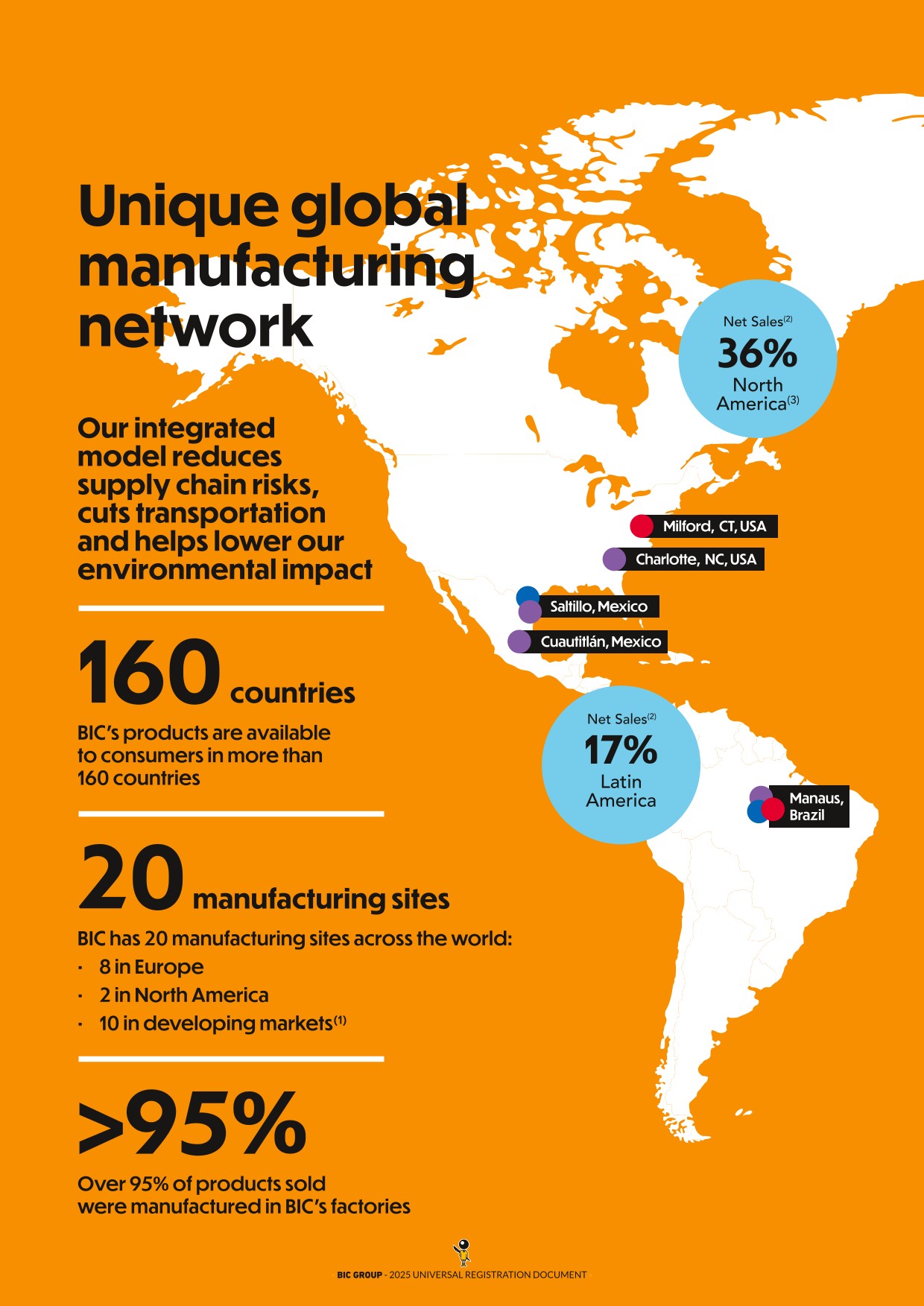
- ●Over 95% of volumes sold were manufactured in BIC’s factories, thus, reliance on contract manufacturing is relatively low.
Further information can be found in chapter 3.
-
2.3.Risk Management and Internal Control Procedures implemented by the Company and Insurance
2.3.1Risk Management and Internal Control definitions and objectives
2.3.1.1Adoption of the Principles of the AMF’s Reference Framework for Risk Management and Internal Control Systems
For the purposes of this section, the Group complies with the principles outlined in Part II of the Risk Management and Internal Control Systems – Reference Framework updated in July 2010 and established by the AMF. This represents a partial adoption of the full text that also provides an Application Guide for internal control procedures for the accounting and financial information published by the issuer.
The related specific control activities are the responsibility of the local subsidiaries. Those subsidiaries continuously adapt them in response to current circumstances, drawing guidance from the Group Accounting and Controllers’ Manuals. The Application Guide has not been formally compared to existing procedures and processes, but the Group does not expect material differences given the similarities between the Application Guide and these two manuals.
a)Risk management
Risk management encompasses a set of resources, behaviors, procedures and actions that are tailored to the characteristics of the Company and its team members while observing legal requirements.
- ●the Company’s ability to achieve its business goals and core strategy;
- ●the Company’s ability to abide by its values, ethics, laws and regulations;
- ●the Company’s personnel, assets, environment, financials, or reputation.
- ●maintain and protect the Company’s value, assets and reputation;
- ●safeguard the Company’s decision-making and processes to achieve its objectives;
- ●ensure that the Company’s actions are consistent with its values.
b)Internal control
The risk management process also incorporates the definition of company-wide internal controls to ensure that:
- ●the Company remains in full compliance with evolving laws and regulations, and operates with the highest level of ethical business standards;
- ●the instructions and guidelines issued by Executive Management are followed;
- ●the Company’s internal processes remain effective and continuously improve, particularly those involving the protection of its assets. Assets are understood to be both tangible and intangible (know-how, brand, image or reputation) and are used throughout existing Company processes;
- ●financial information is reliable.
- ●compliance with all applicable laws and regulations governing the Company and its daily operation;
- ●ongoing communication and guidance to team members to ensure they understand the full scope of their responsibilities and expected contributions to the Company;
- ●guidance for operational, industrial, commercial and financial processes;
- ●producing reliable financial statements(1). The reliability of such information depends on the quality of the associated internal control procedures and system (see reporting procedures section 2.3.2.4 Internal Control procedures) including:
- ●the segregation of duties principle, enabling a clear separation between input, operating and retention duties,
- ●guidance regarding the identification of the source of the information and materials produced,
- ●transactions recorded in accordance with applicable accounting standards.
2.3.1.2Scope of Risk Management and Internal Control
Risk management and internal control, as defined in this report, apply to SOCIÉTÉ BIC as Group parent company and all Group consolidated entities.
- ●the existing organization;
- ●the objectives set out by the Board of Directors and the Executive Committee (see section 2.3.3 Risk Management and Internal Control approach and structure); and
- ●compliance with laws and regulations.
Whenever possible, the Group asks its subcontractors and suppliers to also comply with these principles.
2.3.1.3Limitations of Risk Management and Internal Control Systems
Risk management and internal control systems have inherent limitations and cannot provide an absolute guarantee that the Company’s objectives will be met. Despite the control measures we currently have in place, our systems and those of our third-party service providers are subject to the ever-changing risk of compromised security, acts of vandalism, human errors and other unforeseen events.
-
Corporate Social Responsibility and Performance
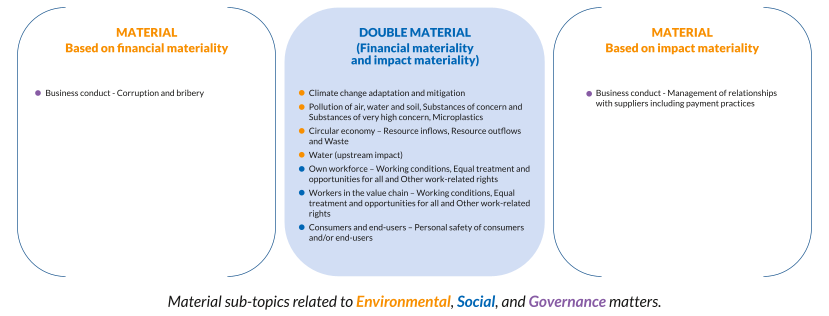
- ●Sustainability Statement prepared in accordance with the requirements of Corporate Sustainability Reporting Directive (EU) 2022/2464 (“CSRD”) and its transposition into French law through Ordinance n° 2023-1142 of December 6, 2023. This section includes information on sustainability matters that are material for BIC based on the double materiality assessment (DMA, see section 3.1.1.4.1) carried out in 2024 and updated in 2025.
- As required by CSRD, BIC’s 2025 Sustainability Statement complies with the European Sustainability Reporting Standards (“ESRS”) as applicable at the end of the reporting period;
- ●Vigilance Plan as per the requirements set out in French law No. 2017-399 of March 27, 2017 on the duty of vigilance of parent companies (“Vigilance Law”) and with Article L. 225-102-4 of the French Commercial Code. This section contains information on the Group’s Vigilance Plan, including the necessary measures to identify and prevent risks relating to severe human rights and fundamental freedoms infringements, health and safety hazards, and environmental damage.
As required by Ordinance n° 2023-1142 of December 6, 2023 and Article L. 2312-17 of the French Labor Code, the Work Council has been informed and consulted on the Sustainability Statement in June and December 2025.
3.1.Sustainability Statement
3.1.1General information (ESRS 2)
3.1.1.1General disclosures
3.1.1.1.1General basis for preparation of the Sustainability Statement (BP-1)
Scope of consolidation
The scope of consolidation of this Sustainability Statement is the same as the one for financial statements (see section 6.1. for more details), i.e. all the consolidated entities as of December 31, 2025 in accordance with Article L. 233-16 of the French Commercial Code, apart from the exceptions stated in the table below.
The reporting scope includes Tangle Teezer, a premium detangling haircare company, acquired by BIC on December 11, 2024.
The entity BIC Cello (India) Pvt. Ltd, divested on November 21, 2025, has been included in the calculation of the 2025 indicators on an eleven-month basis, fully accounted for until its exit from the scope. This applies to all indicators except for Human Resources indicators, which are based on the Year End Headcount for all calculations. To ensure comparability with 2024 data, the following sections provide detailed explanations of changes resulting from scope adjustments.
Certain indicators have specific scopes, as summarized in the table below. These dedicated scopes are systematically indicated in the relevant sections to facilitate reading and ensure clarity of the data.
Topic
Reporting perimeter
Environmental indicators
All BIC consolidated entities, with the following exceptions:
- ●pollution indicators (air, water, and soil pollutants (ESRS E2)) are exclusively reported for BIC manufacturing sites, as these are the locations where such emissions occur;
- ●substances of very high concern (ESRS E2) are reported for all categories excluding Tangle Teezer, Cello (which was divested in November 2025), acquisitions from 2019, and Contract Manufacturers; and
- ●packaging indicators (ESRS E5), established in 2019, do not include BIC Graphic, acquisitions made since 2019, and certain Contract Manufacturers.
Human Resources indicators
All BIC consolidated entities, excluding Cello, which was divested in November 2025.
Health and Safety indicators
All BIC consolidated entities.
Value chain coverage
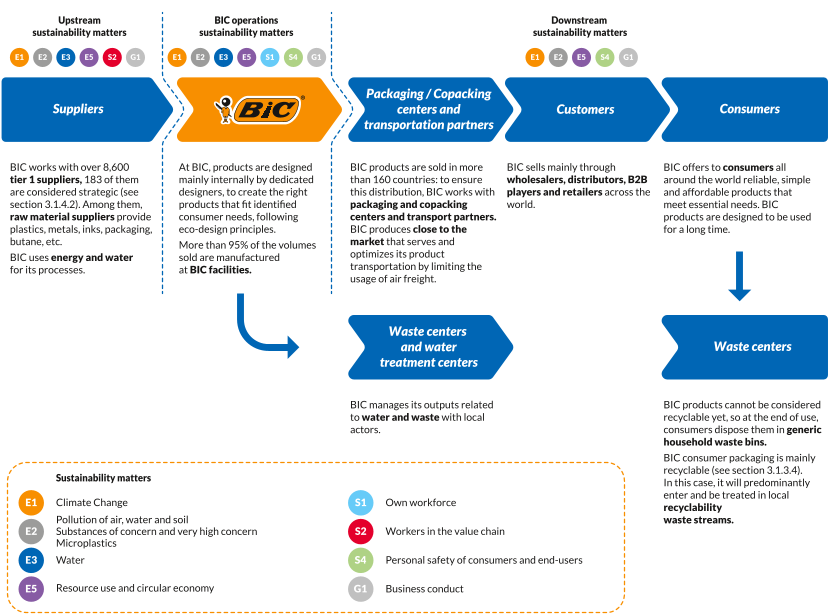
The Sustainability Statement includes information regarding BIC’s upstream (e.g., BIC strategic suppliers(1)) and downstream (e.g., consumers and end-users) value chain, identified during the double materiality assessment (DMA – see section 3.1.1.4.1). BIC’s assessment focused on:
- 1.value chain entities associated with hotspots that present actual or potential impacts on people and/or the environment; and
- 2.entities with significant dependencies on natural, human, and social resources regarding its products and/or services, generating risks and opportunities for the Group.
Omission of specific pieces of information
The Group has not used the option to omit specific pieces of information corresponding to intellectual property, know-how or the results of innovation.
The Group has used the option to omit the absolute weight of inputs (see section 3.1.3.4.2) because this information is considered as sensitive information. The overall relevance of the disclosure regarding inputs is not impaired.
Exemption from disclosure of impending developments or matters in the course of negotiation
No exemption from disclosure of impending developments or matters in the course of negotiation has been used.
3.1.1.1.2Disclosures in relation to specific circumstances (BP-2)
Time horizons
The reference period for this Sustainability Statement corresponds to the calendar year 2025. Some data contained in the report are also measured in comparison to a reference year, which is systematically presented.
- ●short term: reporting period of one year;
- ●medium term: less than five years; and
- ●long term: over five years.
Value chain estimation
BIC compiles its GHG inventory primarily using activity-based data sources. However, for the following upstream and downstream value chain data, BIC relies on financial data estimates:
The emission factors used in the GHG inventory are reviewed, updated, and approved each year via the GHG inventory tool utilized by BIC, to ensure that the information presented is as accurate as possible.
Sources of estimation and outcome uncertainty
The information in this report is primarily based on activity-specific data from the most reliable databases available. When estimates are used, this will be indicated in the relevant sections.
Changes in preparation or presentation of sustainability information
There were no significant changes to the preparation or presentation of sustainability information. However, the scope of environmental metrics—including carbon, pollution, water, and waste— has been expanded to encompass all BIC entities, including Tangle Teezer where relevant. This adjustment is reflected in the respective sections to enhance data transparency.
Reporting errors in prior periods
An error was identified in the 2024 water intensity ratio (water consumption in m3/million euros net revenue), and the data has now been corrected. Detailed explanations are provided in section 3.1.3.3.2.
Some 2024 data have also been updated to replace the provisional estimates used in early 2025 when certain invoices were not yet available. This is systematically indicated in the relevant sections (see section 3.1.3.1.4).
Disclosures stemming from other legislation or generally accepted sustainability reporting pronouncements
BIC reports information stemming from Global Reporting Initiative (GRI)(2) Universal Standards which are listed in the corresponding table that is made available on its website on the following page: ESG Portal | BIC Investors.
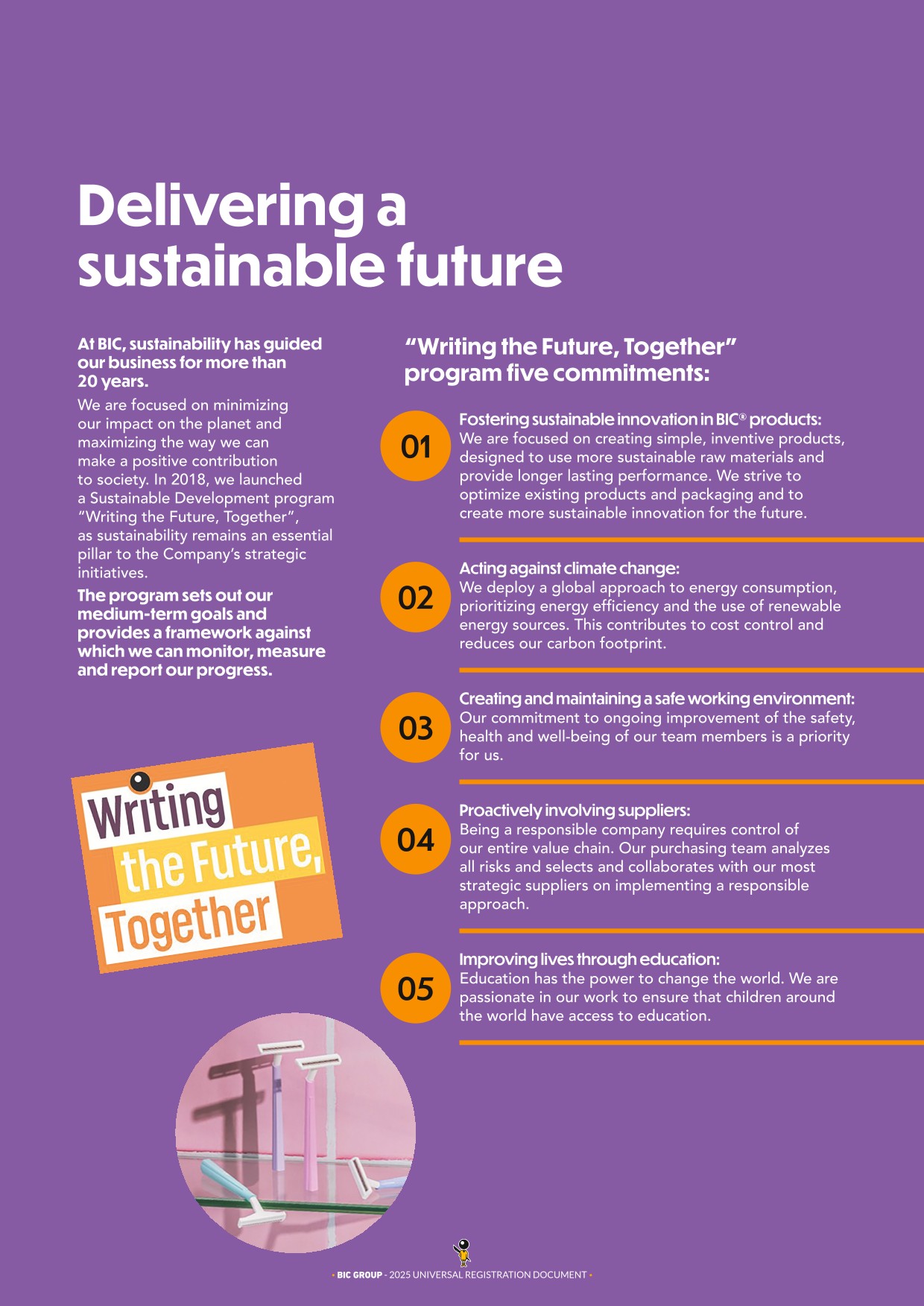
Through its strategy “Writing the Future, Together”, the Group has made commitments in alignment with the following Sustainable Development Goals (SDG)(3). The table below maps these commitments to their respective sections in this chapter.
Sustainable Development Goals
Corresponding section
1. No poverty
Commitment #5, Improving lives through education, is linked to this SDG and corresponds to the Affected Communities topical standard, which has been classified as non‑material in the DMA.
3. Good health and well-being
4. Quality education
Commitment #5, Improving lives through education, is linked to this SDG and corresponds to the Affected Communities topical standard, which has been classified as non‑material in the DMA.
5. Gender equality
Commitment #5, Improving lives through education, is linked to this SDG and corresponds to the Affected Communities topical standard, which has been classified as non‑material in the DMA.
6. Clean water and sanitation
7. Affordable and clean energy
8. Decent work and economic growth
3.1.3.1 / Climate change (ESRS E1)
3.1.3.4 / Resource use and circular economy (ESRS E5)
9. Industry, innovation and infrastructure
12. Responsible consumption and production
13. Climate action
14. Life below water
15. Life on land
16. Peace, justice and strong institutions
3.1.4.1 / Own workforce (ESRS S1)
Incorporation by reference
In order to limit redundancy, certain data is incorporated by reference in this Sustainability Statement.
Specific data points
Corresponding section in the URD
Role of the administrative, management and supervisory bodies
(ESRS 2 GOV-1)4.1.2. / Composition of the Board of Directors
4.1.3. / Changes in the composition of the Board of Directors
Integration of sustainability-related performance in incentive schemes (ESRS 2 GOV-3)
4.2.2.3 / Long-Term Incentives
4.2.2 / Remuneration Policy for Executive Corporate Officers
Statement on due diligence (ESRS 2 GOV-4)
Risk management and internal controls over sustainability reporting
(ESRS 2 GOV-5)2.1. / Main risks and risk assessment
2.2. / Description and mitigation of main risk factors
2.3. / Risk Management and Internal Control Procedures implemented by the Company and Insurance
Strategy, business model and value chain (ESRS 2 SBM-1)
General presentation of the Group / BIC’s Business model
1.2. / Key figures (Number of employees and total revenue)
Product safety – Lighters safety specifications (ESRS S4)
1.4.1 / Business presentation by division
Especially 1.4.1.2 / Flame for Life division
3.1.1.2Governance
3.1.1.2.1Role of the administrative, management and supervisory bodies (GOV-1)
Composition and diversity of the members of BIC’s administrative, management and supervisory bodies
The Board of Directors
As of December 31, 2025, the Board of Directors is composed of 12 members, including one executive member, Rob Versloot, Director and CEO, and 11 non-executive members. More details are presented in section 4.1.2. Their competencies, in particular the ones related to sustainability matters, are detailed in section 4.1.2.3. Their diversity representation as well as the Board’s gender diversity ratio are presented in section 4.1.2.3.
The two Directors representing employees are presented in section 4.1.2.6.
The Board of Directors is comprised of four Independent Directors (see section 4.1.2.5.), their proportion within the various Committees of the Board is presented in section 4.1.4.3.
The Chief Executive Officer
As of September 15, 2025, BIC is led by Rob Versloot, who serves as Chief Executive Officer. He also sits on the Board of Directors. More details on his profile are presented in section 4.1.3.3.
The Executive Committee
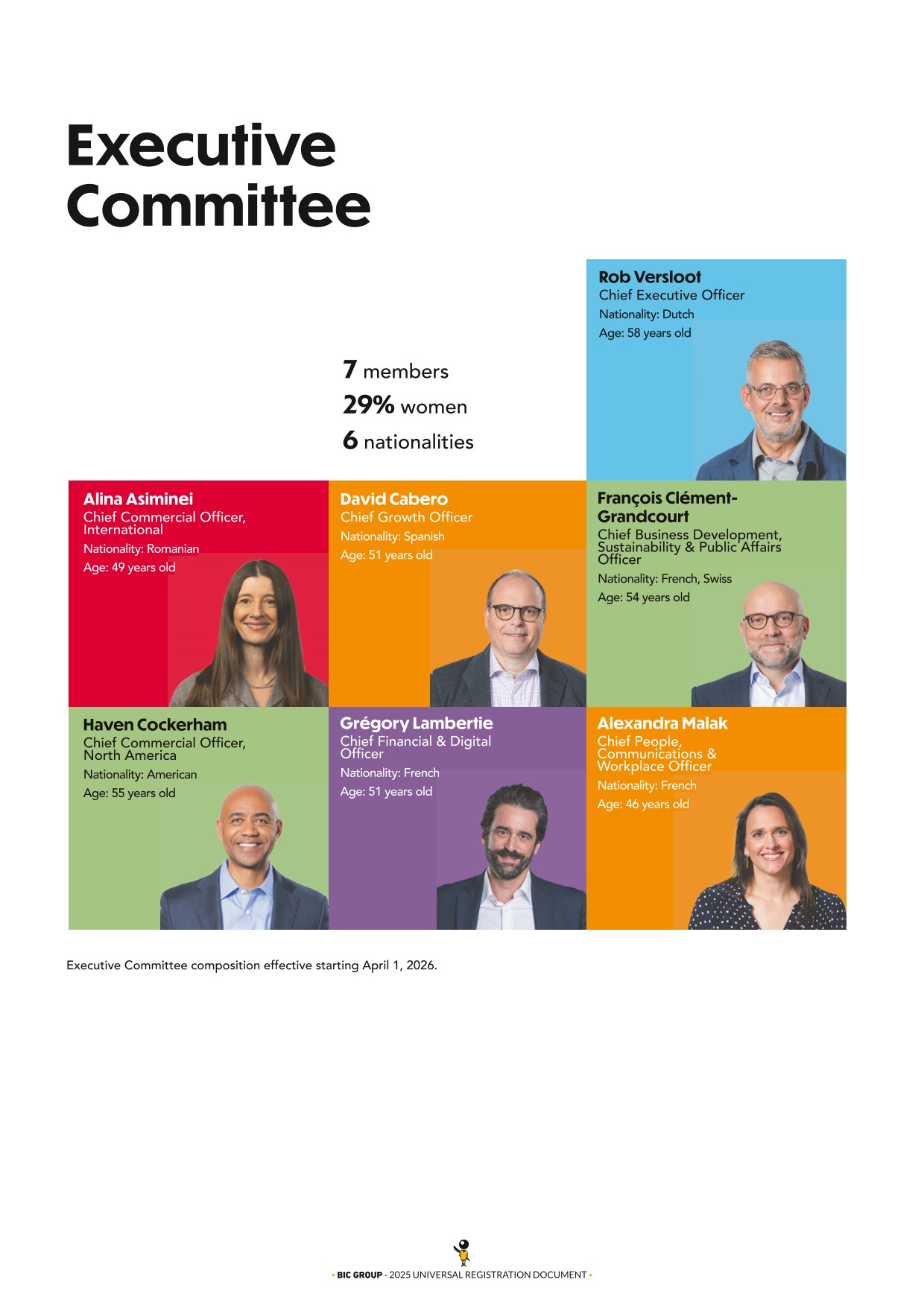
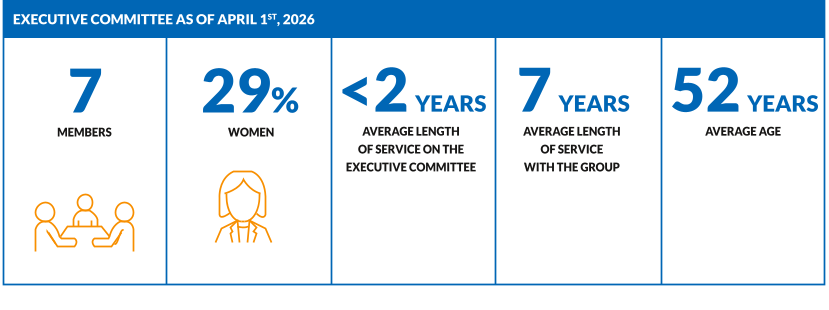
The Executive Committee is composed of seven members (4), including the CEO, all of whom, except for the CEO, are employees of BIC Group. More details on their respective profiles and roles are presented in section 4.1.1.4.
Roles and responsibilities of BIC’s administrative, management and supervisory bodies
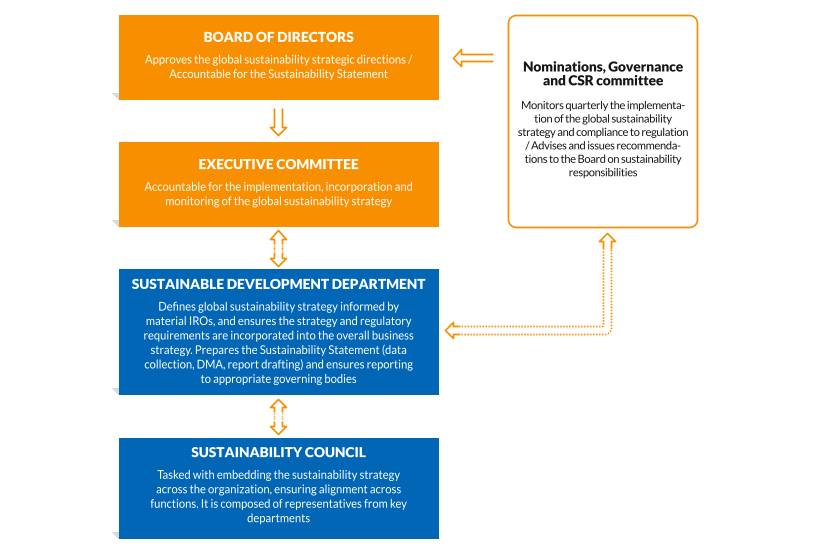
The sustainability strategy – informed by the material impacts, risks and opportunities (IROs) – is defined by BIC’s Sustainable Development Department. Established in 2025, the Sustainability Council is tasked with embedding the sustainability strategy across the organization, ensuring alignment across functions. It is composed of representatives from key departments including Legal & Compliance, Strategy, Procurement, Manufacturing, HR, Quality, HSSE, Commercial, Finance and Communications. BIC’s sustainability strategy “Writing the Future, Together” is presented in sections 3.1.1.3 and 3.3..
The Executive Committee is responsible for incorporating the global sustainability strategy into the overall business strategy, ensuring and monitoring progress.
The Nominations, Governance and CSR Committee is responsible for overseeing this process and reporting to the Board of Directors. It monitors on a quarterly basis the implementation and progress of the global sustainability strategy, including the setting of related targets, as well as BIC’s compliance to regulations. It advises and issues recommendations to the Board on sustainability responsibilities. The Nominations, Governance and CSR Committee’s members, their expertise, missions, and powers are presented in section 4.1.4.3.
To ensure that the necessary skills and expertise to oversee sustainability matters are available or developed, the Nominations, Governance and CSR Committee has undertaken several initiatives this year. A training session delivered by a sustainability consulting firm was organized to deepen leaders’ understanding of the strategic importance of sustainability at the corporate level, and clarify the responsibilities of Board members in governance, informed decision-making, and fostering sustainable innovation.
The Nominations, Governance and CSR Committee has consequently enhanced its collective knowledge in 2025 and plans to continue these efforts in 2026. These initiatives demonstrate the Group’s commitment to equipping its governance bodies with the skills needed to effectively address sustainability-related challenges and opportunities.
BIC’s Sustainable Development Department – led by the Group Sustainability Officer – is working on ensuring proper governance processes, controls and procedures are in place and integrated with other internal functions. In 2025, the Group Sustainability Officer reported directly to the CEO and was also expected to present on a quarterly basis to the Nominations, Governance and CSR Committee.
In 2025, the Group Sustainability Officer presented three times to the Nominations, Governance and CSR Committee, addressing key topics such as the approval of the first CSRD report, Auditors’ observations and the related action plan for upcoming disclosures, as well as the evolution of performance indicators in the Group’s scorecard, which is updated several times a year.
3.1.1.2.2Information provided to and sustainability matters addressed by administrative, management and supervisory bodies (GOV-2)
As highlighted above, the Group Sustainability Officer is expected to report on a quarterly basis to the Nominations, Governance and CSR Committee who reports in turn to the Board of Directors. The Sustainable Development Department is responsible for defining and monitoring the global sustainability strategy informed by the material IROs and ensuring reporting to the appropriate governance bodies, namely the Executive Committee and the Nominations, Governance and CSR Committee.
The full list of material IROs is considered in the overall sustainability strategy’s implementation, while the reporting to the appropriate governance bodies focuses on key material IROs and related targets impacting the overall business strategy.
In this second year of application of the CSRD, the focus has been on revising the DMA to ensure its relevance and compliance, addressing governance expectations under the CSRD, as well as reinforcing the integration of sustainability into corporate strategy and decision-making. The overall governance framework for sustainability matters and IROs will continue to be developed from 2026 onwards.
3.1.1.2.3Integration of sustainability-related performance in incentive schemes (GOV-3)
For 2025, one Environmental, Social and Governance (ESG) dimension is included into long-term incentive systems for Executive Corporate Officers: recyclable packaging (see section 4.2.2.3). The incentive systems were approved as part of the Executive Corporate Officers Remuneration Policy for 2025 by 83.09% of the Shareholders at the last Annual General Meeting (see section 4.2.2).
3.1.1.2.4Statement on due diligence (GOV-4)
BIC continues to reinforce its due diligence and internal control processes. In addition, BIC has updated its Vigilance Plan, presented in section 3.2.. This plan includes, amongst others, measures to attenuate and prevent risks such as third parties’ due diligence and risk mapping.
The table below outlines the information disclosed in the Sustainability Statement regarding the due diligence process:
Due diligence elements
Related sections
Identification of negative impacts in own operations and value chain
3.1.1.4 / Impact, risk and opportunity management (General information)
3.1.3.1.3 / Impact, risk and opportunity management (Climate change)
3.1.3.2.1 / Impact, risk and opportunity management (Pollution)
3.1.3.3.1 / Impact, risk and opportunity management (Water resources)
3.1.3.4.1 / Impact, risk and opportunity management (Resource use and circular economy)
3.1.4.1.1 / Strategy (Own workforce)
3.1.4.2.2 / Impact, risk and opportunity management (Workers in the value chain)
3.1.4.3.2 / Impact, risk and opportunity management (Consumers and end-users)
3.1.5.1.2 / Impact, risk and opportunity management (Business conduct)
Dialogue with
stakeholders3.1.1.3.2 / Interests and views of stakeholders (SBM-2)
3.1.4.1.5 / Interactions with BIC workforce (S1-2, S1-8)
3.1.4.2.2 / Impact, risk and opportunity management (S2-2 Processes for engaging with value chain workers about impacts)
3.1.4.3.2 / Impact, risk and opportunity management (S4-2 Processes for engaging with consumers and end-users about impacts)
Actions to prevent, mitigate and respond to negative impacts
3.1.3.1.3 / Impact, risk and opportunity management (E1-3 Actions and resources in relation to climate change policies)
3.1.3.2.1 / Impact, risk and opportunity management (E2-2 Actions and resources related to pollution)
3.1.3.3.1 / Impact, risk and opportunity management (E3-2 Actions and resources related to water and marine resources)
3.1.3.4.1 / Impact, risk and opportunity management (E5-2 Actions and resources related to resource use and circular economy)
3.1.4.1 / Own workforce (ESRS S1)
3.1.4.2.2 / Impact, risk and opportunity management (S2-3 Processes to remediate negative impacts and channels for value chain workers to raise concerns)
3.1.4.2.2 / Impact, risk and opportunity management (S2-4 Taking action on material impacts on value chain workers and associated risks and opportunities)
3.1.4.3.2 / Impact, risk and opportunity management (S4-3 Processes to remediate negative impacts and channels for consumers and end-users to raise concerns)
3.1.4.3.2 / Impact, risk and opportunity management (S4-4 Taking action on material impacts on consumers and end-users, and associated risks and opportunities)
3.1.5.1.2 / Impact, risk and opportunity management (G1-2 Management of relationships with suppliers)
3.1.5.1.2 / Impact, risk and opportunity management (G1-3 Prevention and detection of corruption and bribery)
Follow-up of the action’s efficiency
3.1.3.1.4 / Metrics and targets (Climate change)
3.1.3.2.2 / Metrics and targets (Pollution)
3.1.3.3.2 / Metrics and targets (Water resources)
3.1.3.4.2 / Metrics and targets (Resource use and circular economy)
3.1.4.1 / Own workforce (ESRS S1)
3.1.4.2.3 / Metrics and targets (Workers in the value chain)
3.1.4.3.2 / Impact, risk and opportunity management (S4-5 Targets related to managing material impacts, risks and opportunities)
3.1.5.1.3 / Metrics and targets (Business conduct)
3.1.1.2.5Risk management and internal controls over sustainability reporting (GOV-5)
Section 2.1. presents BIC’s main risks along with the risk assessment, while section 2.2. describes the main risk factors and their mitigation measures. Section 2.3. outlines the risk management and internal control procedures as well as governance. The material risks identified through the DMA have been further integrated into the Group’s overall Enterprise Risk Management Program and are presented in section 2.1., with their corresponding mitigation measures detailed in section 2.2..
The Sustainable Development Department works closely with all relevant functions to establish controls throughout the sustainability reporting process. In 2025, the roles and responsibilities of each function involved in sustainability reporting, as well as the definition, scope, and calculation methodologies for each sustainability metric, were formalized in dedicated methodology documents. These supporting documents served as the basis for a comprehensive risk assessment designed to evaluate and further enhance the reliability of data across all sustainability metrics.
Environmental KPIs are recorded in a dedicated reporting tool by Health, Safety, Security & Environment (HSSE) managers. A structured, multi-level validation process ensures data integrity: initial control by Plant manager, verification by the Group HSSE team, and final approval of the data by HSSE Directors. These KPIs are also reviewed at these levels during monthly meetings.
A similar process applies to Human Resources (HR) data, supported by periodic data quality checks by Group HR teams and a detailed data collection process.
For sustainability information disclosed in the Universal Registration Document (URD), established data controls are leveraged to ensure reliability, and roles and responsibilities have been clearly defined. All information undergoes multiple reviews and validations by the relevant functions, the Sustainable Development Department, and leadership teams prior to publication.
3.1.1.3Strategy
3.1.1.3.1Strategy, business model and value chain (SBM-1)
The elements of BIC’s strategy that relate to or impact sustainability matters, together with its business model and value chain, are presented below and in the dedicated sections of the Universal Registration Document.
Business model and value chain
BIC’s business divisions – Human Expression, Flame for Life, and Blade Excellence (including Tangle Teezer) – are described in section 1.4.1, detailing the product offering and market positioning in key regions. No BIC products are banned in any markets where the Group operates.
The Group’s business model is outlined in the section General presentation of the Group (BIC’s Business model).
Strategy
Information on the Group’s overall strategy – the BIC Horizon Plan (2020-2025) – is provided in section 1.3.
BIC had reinforced its sustainability strategy through the “Writing the Future, Together” program, launched in 2018 (see section General presentation of the Group / Delivering a sustainable future). This program sets out five sustainability commitments, detailed below, which form an integral part of the BIC Horizon Plan. Further information on the program’s progress can be found in section 3.3..
#1 Fostering sustainable innovation in BIC products:
- ●by 2025, the environmental and/or societal footprint of BIC products should be improved compared to their baseline (SDG 3, 6, 8, 12);
- ●by 2030, BIC aims for 50% use of non-virgin petroleum plastic in BIC products (SDG 14, 15); and
- ●by 2025, BIC aims to use 100% reusable, recyclable or compostable plastic in consumer packaging (SDG 14, 15).
#2 Acting against climate change: by 2025, BIC aims to use 100% renewable electricity (5) (SDG 7, 8, 9, 12, 13).
#3 Committing to a safe work environment: by 2025, BIC is aiming for zero lost time incidents across all operations (SDG 3, 8).
#4 Proactively involving suppliers: by 2025, BIC aims to work responsibly with its strategic suppliers to ensure the most secure, innovative and efficient sourcing (SDG 8, 12, 16).
#5 Improving lives through education: by 2025, BIC aims to improve learning conditions for 250 million children globally - cumulative since 2018 (SDG 1, 4, 5, 6, 8, 13).
With the conclusion of the BIC Horizon Plan and the “Writing the Future, Together” program in 2025, a new strategy and updated sustainability goals will be established, incorporating DMA outcomes and material IROs, as well as the Vigilance Plan. These goals will be defined by the Sustainable Development Department, reviewed by the Sustainability Council, the Executive Committee, and the Nomination, Governance and CSR Committee, and ultimately approved by the Board of Directors.
3.1.1.3.2Interests and views of stakeholders (SBM-2)
BIC regularly engages with stakeholders to ensure their points of view and interests are integrated into the sustainability strategy and action plan. This engagement is described in the table below.
In addition, the 2024 DMA process included an ad-hoc survey that specifically gathered feedback from strategic suppliers, waste management companies, customers, investors, and NGOs. Governance bodies are informed about the views and interests of BIC’s stakeholders regarding sustainability-related impacts through the presentation of DMA results (see section 3.1.1.4.1), as well as through dedicated reporting provided by the relevant departments.
Key Stakeholders
Type of engagement and purpose
Outcome usage and informing process
Suppliers
BIC engages a selected group of key strategic suppliers in an ongoing dialogue through procurement-led meetings to understand respective sustainability goals and common ground for collaboration.
The outcomes allow each department to address communication gaps, develop internal action plans and create collaboration opportunities with the stakeholders.
Employees
BIC runs anonymous pulse surveys and engagement surveys every two years on multiple aspects of engagement across all employees, including perception of sustainability in the Company.
BIC engages in social dialogue, either between management and employees themselves or through employee representatives and labor union representatives at unionized sites.
Customers
(distributors and retailers)BIC engages regularly with customers through meetings, as sustainability has become a strategic topic.
BIC runs ad-hoc surveys with selected customers representatives, including among other topics their perception on BIC sustainability engagement and impact.
Consumers
(shoppers and end users)BIC either receives consumer survey results or conducts ad-hoc surveys in key markets to understand the expectations and perceptions of the brand and BIC products, covering various aspects including sustainability.
BIC encourages consumers’ feedback and actively tracks consumer feedback on BIC products on digital commercial platforms and social media through social listening, while also allowing consumers to directly submit their feedback through the feedback form available on all BIC owned websites.
Shareholders
and investorsBIC engages in dialogue with investors (shareholders and non-shareholders) on a regular basis to educate them on topics such as BIC’s strategy, financial performance and ESG program, through participation in investor conferences and roadshows and through the yearly Shareholders’ Meeting.
Academia, Research, and NGOs
BIC engages in dialogue and workshops with various NGOs, in different sustainability fields, to foster its knowledge and to share its point of view as well as welcome challenges.
BIC engages in consultations and working groups with Academia and Research to join forces in understanding complex and raising sustainability topics, such as recyclability and toxicity.
Industry associations, federations and peers
BIC engages in dialogue through committees, workshops and meetings with various professional federations, whether sector-related (Stationery, Toys, Lighters, Beauty, Chemical, E-Commerce), or geographically organized (by country or by region). The purpose is to understand current and future practices in the respective business areas, particularly regarding regulatory compliance and business practices, and to foster possible synergies and collaboration among peers.
3.1.1.4Impact, risk and opportunity management
3.1.1.4.1Description of process to identify and assess material impacts, risks and opportunities (IRO-1)
Revision of the DMA process in 2025
In 2025, the DMA process was revised to enhance the depth of analysis, broaden internal stakeholder engagement, and leverage available internal resources related to IROs (Impacts, Risks, and Opportunities) understanding. This revision also enabled BIC to address auditor feedback from the initial sustainability reporting exercise and to further align the process with the Company’s Enterprise Risk Management (ERM) Approach and French Vigilance plan.
- ●impact materiality: a sustainability matter is material from an impact perspective when it pertains to the undertaking’s material actual or potential, positive or negative impacts on people or the environment over the short-, medium- and long-term. A material sustainability matter from an impact perspective includes impacts connected with the undertaking’s own operations and upstream and downstream value chain, including through its products and services, as well as through its business relationships;
- ●financial materiality: a sustainability matter is material from a financial perspective if it generates risks or opportunities that affect (or could reasonably be expected to affect) the undertaking’s financial position, financial performance, cash flows, access to financing or cost of capital over the short, medium or long term.
The 2025 revision built upon the work completed for the first CSRD-compliant DMA process in 2024, drawing on:
- ●insights from previous DMA exercises and the Group’s understanding of its IROs;
- ●the expertise of an external consulting firm to support methodology deployment;
- ●contributions from internal stakeholders across various entities and departments, as well as internal and external studies that substantiated the IROs.
Methodological steps
Value Chain and Stakeholder mapping: identifying key CSRD Topics
Conducted in 2024, this phase enabled BIC to identify relevant stakeholders to gather insights on sustainability issues, and review operations across the value chain up to the end consumer. The review covered the Group operational sites, transportation links, Tier 1 suppliers, customers, investors, and end-users.
The 2025 update further integrated existing risk and due diligence processes, such as the Vigilance Plan and ERM. The value chain analysis was broadened beyond Tier 1 suppliers to address ESG considerations across procurement categories, and incorporate life cycle assessments (LCAs) and internal studies tracing some raw material origins beyond Tier 1.
This analysis, combined with feedback from external stakeholders—such as investors, strategic suppliers, waste management companies, customers, NGOs, and members of the Executive Committee—collected through the 2024 survey, informed the identification of key CSRD topics relevant to BIC.
Identification and refinement of IROs for the eight CSRD Topics
For the key CSRD topics deemed relevant to BIC, and as part of the 2024 DMA, BIC’s core team – composed of key internal stakeholders (Sustainable Development, Procurement, Commercial, Finance, Human Resources, Strategy) – had identified a preliminary list of potentially material IROs:
- ●impacts: using insights from the value chain review, BIC conducted a high-level assessment of all sustainability matters listed in Application Requirement 16 (ESRS 1 Appendix A) to determine areas where the Company may have an impact. Impacts that also represent dependencies were noted. Potential impacts were identified based on the expertise of the BIC core team and by also considering impacts recognized by peers and sustainability organizations;
- ●risks and opportunities: BIC reviewed potential dependencies using the six forms of capital(6) defined by the International Integrated Reporting Council (IIRC), ESRS sustainability matters and impacts, and Company-specific dependencies, selecting those relevant to BIC. Whether each potential dependency was expected to represent a risk, an opportunity, or both was also noted.
To refine and validate this initial list as part of the 2025 revision, eight dedicated workshops and meetings were organized for each CSRD topic. These sessions aimed to leverage internal content, deepen understanding of IROs, and align on the final list of potentially material topics. The workshops covered key themes identified in Phase 1:
- ●climate change;
- ●pollution;
- ●water;
- ●resource use & circular economy;
- ●own workforce;
- ●workers in the value chain;
- ●consumers and end-users;
- ●business conduct.
Participants included subject matter experts at the corporate level (Climate Change Project Manager; Director, Circular Economy; Sustainable Development Team; Finance; Procurement; ERM; Product Safety; HSSE; HR; Compliance; Quality) as well as representatives from factories and Tangle Teezer to ensure comprehensive coverage.
This process enabled BIC to consolidate a robust list of potentially material IROs, refine them further, and substantiate positive impacts and opportunities where relevant.
IRO Materiality Assessment
- ●impact materiality: subject matter experts evaluated the scale, scope, irremediability, and likelihood of impacts across short-, medium-, and long-term horizons. Severity scores were then compared against a materiality threshold (set at -3 to +3). Any impact with a severity score above this threshold was considered material;
- ●financial materiality: in parallel, the Sustainable Development Team, supported by a Finance specialist, conducted a materiality assessment of risks and opportunities identified. Preliminary financial estimates were developed using data from BIC’s ERM function, internal risk assessments and sector-specific benchmarks. These estimates combined quantitative indicators along with qualitative analysis to provide an initial view of potential financial impacts. Where possible, materiality was estimated using a financial threshold aligned with the ERM framework, with certain risks provisionally classified as material pending completion of a more detailed financial assessment.
- Further work will continue in 2026, in collaboration with the ERM function and IRO owners, to finalize this quantitative analysis in line with ESRS 1 requirements. This will include a comprehensive evaluation of the likelihood and magnitude of risks and opportunities, and comparison against the materiality threshold.
Quantitatively substantiated positive impacts and opportunities were retained, including the development of a bespoke machine for disassembling BIC lighters and associated collection programs for used lighters. These initiatives support resource efficiency, reduce dependency on virgin raw materials, and enable the emergence of new circular business models. Additionally, BIC identified opportunities to reinforce its leadership in lighter safety by maintaining standards that meet or exceed regulatory requirements, thereby strengthening customer trust and competitive differentiation.
Approval of Material IROs and Integration into Group processes
The revised list of material IROs was reviewed and approved by BIC’s CEO on December 15, following prior presentation to the Nomination, Governance and CSR Committee on October 29, 2025.
The outcomes of the DMA were incorporated into the overall risk management process, which strengthens alignment between chapter 2 (Risk factors and management) and chapter 3 (3.1. / Sustainability Statement). The DMA also served as a foundation for defining BIC’s sustainability strategy beyond the current “Writing the Future, Together” strategy, which concluded in 2025. Section 3.1.1.2 outlines the governance framework for managing sustainability matters.
The list of material IROs is provided in the section below. This process also confirmed that two CSRD topics were assessed as not material.
Non-materiality of ESRS E4 – Biodiversity and ecosystems
The risk analysis conducted by an external consultancy mapped BIC and strategic supplier locations against the World Database of Key Biodiversity Areas (developed by BirdLife International on behalf of the KBA Partnership – www.keybiodiversityareas.org). The analysis highlighted that two BIC sites are located near biodiversity-sensitive areas.
However, it also confirmed that neither of these sites, nor any other assessed sites, contributes to direct drivers of biodiversity loss. Furthermore, no impacts were identified on species status, ecosystem extent or condition, nor any dependencies or impacts on ecosystem services. Consequently, no biodiversity-related risks or opportunities were detected. Likewise, no affected communities required consultation, and no mitigation measures were deemed necessary.
Non-materiality of ESRS S3 – Affected communities
The ESRS S3 Affected Communities is not considered material since BIC’s activities, particularly its industrial operations, have negligible or low impact on the communities that could potentially be directly or indirectly affected. All environmental, social, and governance matters are managed in accordance with local legislation and the Group policies which help to maintain a minimal impact on the surrounding communities.
3.1.1.4.2Material impacts, risks and opportunities and their interaction with strategy and business model (SBM-3)
IROs as well as their interaction with BIC’s strategy and business model are detailed at the beginning of each thematic section and are also listed in the table below. All IROs identified and considered material are derived from ESRS topics, no entity-specific topic have been identified as of today.
The revision of the 2024 DMA in 2025 led to several updates to the list of material impacts, risks, and opportunities (IROs), which are detailed below and in the relevant sections:
- ●impacts and risks related to air pollution were classified as material, following the first group-wide consolidation of pollution data in 2024;
- ●microplastics are now considered material from both an impact perspective and financial materiality, pending completion of a more detailed financial assessment;
- ●water impacts in the upstream segment of BIC’s value chain have been identified as material;
- ●material IROs under ‘S1 Own workforce’ have been further specified in line with ESRS requirements, as outlined in Application Requirement 16 (ESRS 1 Appendix A);
- ●lobbying-related IROs were reassessed and deemed not material, given BIC’s limited involvement in such activities.
ESRS
Description
Further details in section
Potential / Actual
Impact Materiality (N/P) (b)
Financial Materiality
Location in Value Chain
Time
Horizon (a)Risk
Opportunity
E1 –
Climate ChangeClimate change adaptation
Risk to human health and safety, assets (building and facilities), and production capability in case of extreme weather events
X
Upstream, Own Operations
MT, LT
Negative impact on the environment from adaptation strategies for factories in physical climate risk areas, which could increase BIC’s GHG emissions
Potential
N
Own Operations
ST, MT, LT
Climate change mitigation
Risk arising from changing regulations and potential damage to reputation if insufficient climate change mitigation action is taken
X
Upstream, Own Operations
MT, LT
Negative impact on the environment due to BIC’s contribution to GHG emissions
Actual
N
Upstream, Own Operations, Downstream
ST, MT, LT
E2 – Pollution
Adverse effects on human health and ecosystems resulting from air emissions generated by BIC industrial activities
Actual
N
Own Operations
Upstream, Downstream
ST, MT
ST, MT, LT
Adverse effects on human health and ecosystems resulting from water and soil emissions generated by BIC industrial activities
Actual
N
Upstream, Own Operations, Downstream
ST, MT, LT
Adverse effects on human health and ecosystems resulting from substances of concern and very high concern being used in production or procured, and/or leaving BIC facilities as emissions, or as part of products
Actual
N
Upstream, Own Operations, Downstream
ST, MT, LT
Potential adverse effects on human health and ecosystems associated with microplastics being used or generated by BIC production process and value chain
Potential
N
Upstream, Own Operations, Downstream
ST, MT, LT
Risks from fines in case of non-compliance with applicable laws and/or required remediation in case of pollution incidents, changing regulations, and to brand reputation
X
Own Operations, Downstream
MT, LT
E3 –
Water resourcesRisk of water resource shortages for sites located in areas exposed to high water stress
X
Upstream, Own Operations
MT, LT
Significant use of fresh water that could negatively impact fresh water availability, especially in areas of high-water stress
Actual
N
Upstream
ST, MT, LT
E5 – Resource use and circular economy
Negative impacts arising from the use of raw materials, which may lead to resource depletion and increased pressure on natural resources, given that BIC production processes remain largely linear today
Actual
N
Upstream, Own Operations
ST, MT
Negative impacts arising from the use of raw materials, which can generate various waste streams if full circularity is not achieved
Actual
N
Own Operations, Downstream
OO: ST, MT Downstream: ST, MT, LT
The development of a bespoke machine for disassembling BIC lighters and collection programs allows BIC to repurpose their valuable components and materials (plastic and metals), contributing to the development of a new industrial model that promotes more circular economy
Actual
P
Own Operations, Downstream
MT, LT
Failure to address regulatory evolutions, economic fluctuations or mere stock reduction, given BIC’s dependency on availability of raw materials, machinery and equipment to operate
X
Upstream, Own Operations, Downstream
MT, LT
Failure to address increasing plastic concerns, deliver external commitments and/or adapt BIC business model
X
Upstream, Own Operations, Downstream
MT, LT
The development of a bespoke machine for disassembling BIC lighters and collection programs provides BIC with the opportunity to reduce its reliance on suppliers in reusing valuable materials, mitigate exposure to price volatility and anticipate upcoming regulations
X
Upstream, Own Operations, Downstream
MT, LT
S1 –
Own workforceLack of adequate social protection for employees and their families can reduce their engagement and well-being
Actual
N
Own Operations
ST
Social protection for employees and their families enhances engagement and fosters well-being
Potential
P
Own Operations
MT, LT
BIC employs non-employees within its workforce, resulting in less transparency regarding the security of their contracts and social protection
Potential
N
Own Operations
ST, MT, LT
Remuneration at BIC meets national minimum wage requirements; however, in certain cases, it may not reach a level considered sufficient to ensure an adequate standard of living
Potential
N
Own Operations
ST, MT, LT
A lack of social dialogue, together with inadequate respect for and protection of workers’ rights, could threaten to erode the social climate and negatively impact employee well-being
Potential
N
Own Operations
ST, MT, LT
Psychosocial risks, such as those arising from factors like working hours, work-life balance, or night shifts, can contribute to diminished wellbeing, increased absenteeism and workplace accidents
Potential
N
Own Operations
ST, MT, LT
Safety issues and workplace incidents negatively impact workers’ health and safety
Actual
N
Own Operations
ST, MT, LT
Gender equity is not achieved due to the predominance of male-dominated roles in factories
Actual
N
Own Operations
ST, MT
Negative impact on workers’ mental health, physical integrity, well-being, and quality of work life due to potential situations of harassment, violence and/or discrimination
Actual
N
Own Operations
ST, MT, LT
Presence in countries with insufficient regulations on working conditions and other work-related rights may negatively impact BIC own workforce
Potential
N
Own Operations
ST, MT, LT
Failure to comply with regulations or identify and address human rights violations in the countries BIC operates, which could result in business disruption, legal action and fines, and damage the brand and customer loyalty
X
Own Operations
ST, MT, LT
S2 – Workers in the value chain
Negative impact on workers given BIC’s diverse value chain and the presence of its suppliers in countries with insufficient regulations on working conditions, equal treatment, and opportunities, as well as other work-related rights
Potential
N
Upstream
ST, MT, LT
Failure to comply with regulations in force and/or to identify and address human rights violations in BIC’s partners resulting in business disruption and/or reputational damage
X
Upstream
ST, MT, LT
S4 – Consumers and end-users
Potential adverse effects on consumers and end-users’ health and safety in cases of product non-compliance
Potential
N
Downstream
ST, MT, LT
Risk of non-compliance with increasingly stringent product safety regulations, which could result in non-compliant products being placed on the market
X
Own Operations, Downstream
MT, LT
Opportunity for the Group to strengthen market positioning with respect to lighters by consistently meeting – or even exceeding – applicable product safety requirements
X
Own Operations, Downstream
ST, MT, LT
G1 – Business conduct
Failure to comply with applicable anti-bribery and anti-corruption laws, including but not limited to French anti-corruption laws (“Sapin II law”) and/or BIC policies that prohibit corruption and influence peddling, potentially resulting in legal actions, prosecutions, sanctions, fines, reputational damage, or loss of business
X
Upstream, Own Operations, Downstream
ST, MT, LT
Potential negative impact of BIC’s approach to managing relationships with its suppliers, especially small and medium-sized undertakings, including payment practices
Potential
N
Upstream
ST, MT, LT
- (a)ST (Short Term), MT (Medium Term), LT (Long Term) as defined in section 3.1.1.1.2
- (b)N (Negative), P (Positive)
For the reporting period, there has not been a material financial effect related to ESG risks stemming from the DMA. Consequently, there is no material impact on the financial statements that warrants disclosure.
3.1.1.4.3Group policies development and review (IRO management)
All employees are required, at all times, to comply with BIC’s policies and standards. To ensure consistency and proper governance, the Group Policy Committee, chaired by the Director for Enterprise Risk Management (ERM), was established in 2024 to oversee the development, issuance, and regular review of Group policies. In 2025, this committee supported the rollout of several new policies, such as the ESG Policy or the Resource Use and Circular Economy Policy, and the revision of existing ones to reflect evolving regulatory requirements and best practices.
3.1.1.4.4Disclosure Requirements in ESRS covered by Sustainability Statement (IRO-2)
The tables in section 3.1.6.1 present the disclosure requirements that BIC has complied with in preparing the Sustainability Statement, following the outcome of the DMA, as well as the key undisclosed datapoints. The material IROs were aligned with the CSRD datapoints using the “EFRAG IG 3: List of ESRS Datapoints” to identify the relevant disclosure requirements and datapoints for BIC.
In line with CSRD requirements, the datapoints deriving from other EU legislations are presented for each disclosure requirement, along with the section in which they can be found in the Sustainability Statement. Those other EU legislations are:
- ●Sustainable Finance Disclosures Regulation: Regulation 2019/2088 of the European Parliament and of the Council of November 27, 2019 on sustainability-related disclosures in the financial services sector (SFDR);
- ●Pillar 3: Regulation (EU) no. 575/2013 of the European Parliament and of the Council of June 26, 2013 on prudential requirements for credit institutions and investment firms and amending Regulation (EU) no. 648/2012 (Capital Requirements Regulation “CRR”);
- ●Benchmark Regulation: Regulation (EU) 2016/1011 of the European Parliament and of the Council of June 8, 2016 on indices used as benchmarks in financial instruments and financial contracts or to measure the performance of investment funds and amending Directives 2008/48/EC and 2014/17/EU and Regulation (EU) no. 596/2014; and
- ●EU Climate Law: Regulation (EU) 2021/1119 of the European Parliament and of the Council of June 30, 2021 establishing the framework for achieving climate neutrality and amending Regulations (EC) no. 401/2009 and (EU) 2018/1999 (‘European Climate Law’).
-
3.2.Vigilance Plan
3.2.1Introduction
In accordance with the French Law no. 2017-399 of March 27, 2017, on the duty of vigilance of parent companies (the “Vigilance Law”), and with Article L. 225-102-4 of the French Commercial Code, BIC implemented, through its vigilance plan (the “Vigilance Plan”), the necessary measures to identify, as an obligation of means, risks and preventive measures relating to severe human rights and fundamental freedoms infringements, health and safety hazards, and environmental damage.
- ●BIC Group activities, which may include activities of the Group’s parent company, and subsidiaries controlled directly or indirectly by BIC within the meaning of Article L. 233-16 of the French Commercial Code (the “Subsidiaries”); and
- ●activities of suppliers and subcontractors with whom BIC entities have an “established business relationship” (respectively the “Suppliers” and the “Subcontractors”).
This Vigilance Plan therefore covers all of BIC’s activities as well as those of its subsidiaries. It also takes into consideration the activities of its stakeholders.
- ●a mapping that identifies, analyses and ranks risks (refer to section 3.2.4);
- ●procedures implemented to regularly assess, in accordance with said risk mapping, the situation of Suppliers, Subcontractors and Subsidiaries (refer in particular to sections 3.2.4 and 3.2.5.2);
- ●appropriate actions to mitigate risks or prevent severe violations and the system in place to monitor the implementation and efficiency of these measures (refer to sections 3.2.5 and 3.2.6); and
- ●BIC’s whistleblowing mechanism that facilitates the reporting of alerts, which may relate to existing or potential risks (refer to section 3.2.5.3).
-
3.3.Writing the Future, Together program
In 2018, BIC set commitments grounded in the principles of its sustainable development program – materiality assessments and the UN Sustainable Development Goals – as well as regulatory requirements, stakeholder consultations, and insights from regular benchmarking.
The “Writing the Future, Together” program, driven by BIC’s sustainability ambition (see section 3.1.1.3.1), encompassed five initial commitments that were an integral part of the Group’s strategic Horizon Plan and has now reached its conclusion, paving the way for the next phase of BIC’s sustainability journey.
#1 Fostering sustainable innovation in BIC products:
- a.by 2025, the environmental and/or societal footprint of BIC products should be improved compared to their baseline
(SDG 3, 6, 8, 12); - b.by 2030, BIC aims for 50% use of non-virgin petroleum plastic in its products (SDG 14, 15);
- c.by 2025, BIC aims to use 100% reusable, recyclable or compostable plastic in consumer packaging (SDG 14, 15).
#2 Acting against climate change: by 2025, BIC aims to use 100% renewable electricity (SDG 7, 8, 9, 12, 13).
#3 Committing to a safe work environment: by 2025, BIC is aiming for zero lost time incidents across all operations
(SDG 3, 8).#4 Proactively involving suppliers: by 2025, BIC aims to work responsibly with its strategic suppliers to ensure the most secure, innovative and efficient sourcing (SDG 8, 12, 16).
#5 Improving lives through education: by 2025, BIC aims to improve learning conditions for 250 million children globally - cumulative since 2018 (SDG 1, 4, 5, 6, 8, 13).
- ●source 100% of paper and carboard packaging from certified cellulosic (31) and/or recycled sources by 2025;
- ●have 100% of its plastic packaging be PVC-free by 2025;
- ●source 75% of the material used in its plastic packaging from recycled content by 2025.
In addition to these packaging-related commitments, BIC reinforced its climate strategy in 2022 by adopting greenhouse gas (GHG) emissions reduction targets aligned with the Paris Agreement. These include a long-term decarbonization ambition across all scopes and specific 2030 objectives compared to 2019 levels:
- ●-50% for Scope 1 emissions;
- ●-100% for Scope 2 emissions; and
- ●-5% for Scope 3 emissions overall, with a -30% reduction for the Flame for Life division.
Several of these commitments came to an end in 2025. The chart below illustrates the advancements made toward these targets and the corresponding base year, with additional details provided in the 3.1. / Sustainability Statement where relevant.
#1 Fostering sustainable innovation in BIC products
Refer to section 3.1.3.4 for additional information on impacts and risks (b) addressed by this commitment, as well as progress updates.
UN SDG (a)


Commitments
2020 status
2025 result
By 2025, 100% of BIC consumer plastic packaging (d) reusable, recyclable, or compostable.
42.5%
83.8%
By 2025, environmental and/or societal footprint of BIC products improved compared to their baseline (to the extent of the categories’ coverage of the EMA tool (c)).
Not applicable
Eight products or product lines improved in 2025, 50 since 2020
By 2025, 100% of paper and cardboard packaging (d) sourced from certified cellulosic and/or recycled sources.
97.3%
99.6%
By 2025, 100% of BIC plastic packaging (d) PVC-free.
94.4%
98.9%
By 2025, 75% of the material used in BIC plastic packaging (d) sourced from recycled content.
48.9%
64.2%
By 2030, 50% non-virgin petroleum plastic in BIC products.
4.3%
6.5%
#2 Acting against climate change
Refer to section 3.1.3.1 for additional information on impacts and risks (b) addressed by this commitment, as well as progress updates.
UN SDG


Commitments
2020 status
2025 result
By 2025, 100% renewable (e) electricity.
79%
85%
By 2030, reduction of Scope 1 emissions by 50%.
(a)
-47.1%
By 2030, reduction of Scope 2 emissions by 100%.
(a)
-49.0%
By 2030, reduction of Scope 3 emissions by 5% overall, with a -30%
reduction for the Flame for Life division.(a)
-15.0%
-8.8%
- (a)The baseline for GHG emissions reduction was set at 2019. Due to the global pandemic in 2020, the results for that year do not provide an accurate reflection of performance and are therefore not disclosed.
#3 Committing to a safe work environment
Refer to section 3.1.4.1.2 for additional information on impacts and risks (b) addressed by this commitment, as well as progress updates.
UN SDG
Commitments
2020 status
2025 result
By 2025, zero lost time incidents (f) across all operations.
50 lost time incidents
49 lost time incidents
#4 Proactively involving suppliers
Refer to section 3.1.4.2 for additional information on impacts and risks (b) addressed by this commitment, as well as progress updates.
UN SDG

Commitments
2020 status
2025 result
By 2025, work responsibly with its strategic suppliers (g) to ensure the most secure, innovative and efficient sourcing.
(% of strategic suppliers involved in at least one responsible procurement action, including an assessment of their sustainability performance and practices using the supplier sustainability assessment tool)
25.8%
100%
#5 Improving lives through education
While not classified as material within the Double Materiality Assessment, this approach demonstrates the positive impact that BIC strives to have on people of the local communities where it operates and beyond.
UN SDG


Commitments
2020 status
2025 result
By 2025, improve learning conditions for 250 million children globally through different types of activities: actions targeting children, teachers and/or parents such as workshops, contests, local and global partnerships with NGOs; “Global Education Week” employees’ volunteering in favor of education promotion; several BIC Corporate Foundation initiatives in favor of promoting creativity in education; other local CSR.
118 million children since 2018
245 million children since 2018
- (a)UN Sustainable Development Goals.
- (b)Impacts and risks identified through the Double Materiality Assessment, as required by the CSRD regulation.
- (c)“Environmentally & socially Measurable Advantage” scorecard. Coverage and methodology are reported in section 3.1.3.4.1.
- (d)Packaging commitments do not include BIC Graphic, acquisitions made since 2019, and certain Contract Manufacturers. Cello, Canada, Oceania and Kenya not included in 2020.
- (e)Electricity generated from biomass (including biogas), geothermal, solar, water (including hydro power) and wind power is considered renewable.
- (f)Lost Time Incident (LTI): Incident in the workplace resulting in an injured person, unable to work for at least one day (the day of the incident is not included).
- (g)For direct and indirect Tier 1 suppliers, BIC has set up criteria to qualify them as strategic. The criteria are linked to BIC’s spending with the supplier, the supplier’s uniqueness, its impact on BIC’s business continuity, growth and development, and the sustainable advantages it offers to BIC.
(1)Strategic suppliers: for direct and indirect Tier 1 suppliers, BIC has set up criteria to qualify them as strategic. The criteria are linked to BIC’s spending, the uniqueness of a supplier, its impact on BIC’s business continuity, growth and development, and the sustainable advantages brought to BIC.(2)The Global Reporting Initiative is a global organization that provides standards for reporting environmental, social and economic impacts.(3)The Sustainable Development Goals have been set by the United Nations in 2015 with the adoption of the 2030 Agenda for sustainable development.(4)Effective starting April 1, 2026.(5)Electricity generated from biomass (including biogas), geothermal, solar, water (including hydro) and wind power is considered renewable.(6)All organizations depend on various forms of capital for their success. The six categories of capital defined by the International Integrated Reporting Council (IIRC) are: financial capital, manufactured capital, intellectual capital, human capital, social and relationship capital and natural capital.(7)Electricity generated from biomass (including biogas), geothermal, solar, water (including hydro) and wind power is considered renewable.(8)As highlighted in section 3.1.3.1.4, the 2030 emission‑reduction targets for scopes 1 and 2 are aligned with the Paris Agreement’s 2030 trajectory which aim to limit global temperature rise to 1.5 °C above pre‑industrial levels by 2050.The Group’s Scope 1 and 2 commitments exceed recommended targets.(9)Electricity generated from biomass (including biogas), geothermal, solar, water (including hydro) and wind power is considered renewable.(10)Factory where the threshold value for PERC, as outlined in Annex II of Regulation (EC) No 166/2006, was exceeded in 2024.(11)Alternative materials are defined as plastics that are not made of petroleum, such as bio-based plastics.(12)The concept of recovery was introduced into the 4Rs philosophy in 2025 to reflect the approach adopted by BIC.(13)Acrylonitrile, Butadiene, Styrene.(14)Spend in Euros. Excluding Contract Manufacturers.(15)The categories “Plastics”, “Metals”, and “Chemicals” refer only to materials used in product manufacturing, while “Packaging” covers materials used specifically for packaging products.(16)The percentage of biological materials — as required by ESRS E5‑4 §31(b) — is included within the percentage of non‑virgin petroleum plastics used in BIC products, as presented here. For packaging, the relevant information is provided in the ‘Progress in Packaging’ table under the categories ‘percentage of cardboard packaging from certified and/or recycled sources’ and ‘percentage of recycled content in plastic packaging.’(17)Source: internal estimate based on common low-cost lighter sizes.(18)Waste Electrical and Electronic Equipment.(19)Benchmark provided by BIC’s provider and based on results from comparable organizations.(20)The Sibjet site (Djeep) was not included in the reporting perimeter until 2024 and is now part of the 2025 figures. This change broadens the reporting scope and should be taken into account when comparing year‑on‑year results.(21)CSRD definition (ESRS S1-10 and AR 73): In the EEA, the wage benchmark must be at least the statutory minimum wage as set by Directive (EU) 2022/2041 or internationally recognized reference values (60% of median or 50% of average gross wage). Outside the EEA, it must follow existing legal or collectively agreed standards ensuring a decent living, or if none exist, an internationally recognized benchmark such as those from the Sustainable Trade Initiative (IDH).(22)At BIC Corporation.(23)The target year was revised to account for the current economic climate but progress continues to be made.(24)Level 4 and above positions: Executives, including Executive Committee.(25)In accordance with French law, directors who represent employees are not included in the figures used to calculate the percentage of women on the Board.(26)Considering only permanent and fixed‑term employees; excluding apprentices and interns.(27)Refers to any company which manufactures products on behalf of BIC.(28)For direct and indirect Tier 1 suppliers, BIC has set up criteria to qualify them as strategic. The criteria are linked to BIC’s spending, the uniqueness of a supplier, its impact on BIC’s business continuity, growth and development, and the sustainable advantages brought to BIC.(29)A severe issue or incident related to the safety of BIC products is defined as a product non‑conformity that may impact the health and safety of consumers, cause an injury, require regulatory notification or market action (such as a recall or withdrawal) which may generate media exposure that could adversely affect the company’s image and reputation.(30)In particular, BIC is a member of: EWIMA (European Writing Instrument Manufacturers Association); WIMA (Writing Instrument Manufacturers Association); ACMI (Art & Creative Materials Institute); TIE (Toy Industries of Europe); CEFIC (European Chemical Industry Council); PCPC (Personal Care Products Council) in the U.S., FEBEA (Fédération des entreprises de la beauté) in France and EFLM (European Federation of Lighter Manufacturers).(31)Made from certified cellulose from responsibly managed forests endorsed by independent certification schemes. - a.by 2025, the environmental and/or societal footprint of BIC products should be improved compared to their baseline
-
Corporate governance
In accordance with Articles L. 225-37 et seq. and L. 22-10-9 and L. 22-10-10 of the French Commercial Code, this chapter deals with the conditions under which the work of the Board of Directors is prepared and organized, including the organizational principles that guarantee a balance of powers. It also describes the components of the remuneration of Corporate Officers, including the remuneration policy in accordance with the above-mentioned provisions of the French Commercial Code, as well as the transactions in BIC shares declared by Corporate Officers in 2025.
- ●Remuneration Committee;
- ●Nominations, Governance and Corporate Social Responsibility (CSR) Committee; and
- ●Audit Committee.
It includes the Corporate Governance Report referred to in Article L. 225-37 of the French Commercial Code. The Board of Directors approved it on February 24, 2026.
The Corporate Governance cross-reference table (page Cross-reference table of the corporate governance report) indicates the sections of the Universal Registration Document corresponding to the sections of the Corporate Governance Report that are excluded from this chapter.
The Company refers to the rules of good governance as defined in the AFEP-MEDEF(1) Corporate Governance Code for listed companies. It complies with all the provisions of this code, subject to the comments made in this report (§ 4.1.1.5).
4.1.Administrative and management bodies
4.1.1.Governance structure
Since its creation, the Company has been a limited liability company (société anonyme) with a Board of Directors. Its strong family shareholdership allows it to evolve and adapt to any new challenges and requirements alongside its stakeholders. The composition of the Board of Directors reflects this family heritage, through the representation of the family shareholding and the presence of Independent Directors in compliance with the principles of corporate governance.
4.1.1.1.Our philosophy
The Group’s history is deeply rooted in an entrepreneurial spirit. This has led to inventive expansion into new categories and dynamic expansion into new regions. We consider entrepreneurship to be in our DNA. It is vitally important for the Board and the Chief Executive Officer (CEO) to foster that spirit and keep it alive for future generations.
The Board works with the Chief Executive Officer to build a vision and a set of expectations and guidelines. This includes setting our growth aspirations, determining what lines of business we should be in, setting our margin expectations, and determining how to pursue our goals.
The Chief Executive Officer and his team construct the long-term strategy and annual plans to achieve these goals. In turn, the Board reviews these plans, challenges them, and ultimately approves them. Upon approval, the Board becomes jointly accountable with the Chief Executive Officer, for the execution of the Company’s long-term strategy.
The Purpose of BIC is to create essential high quality, safe, affordable, essential products trusted by everyone. Our vision is: “to bring simplicity and joy to everyday life”. Our Values are Integrity, Ingenuity, Responsibility, Sustainability, Simplicity and Teamwork.
The Board is also responsible for monitoring the performance of the Company. Establishing expectations and scope of activity is one of the most important Board functions. It is the Chief Executive Officer’s responsibility to provide the necessary information, analysis, and insight for the Board to effectively carry out its duties.
- ●macro-economic trends;
- ●competitive environment;
- ●new technologies;
- ●potential acquisitions;
- ●analysis of strengths, weaknesses, opportunities, and threats (so called “SWOT” analysis);
- ●ROI projections; and
- ●retrospective analysis.
Our behavior is at all times consistent with the values and the DNA of BIC: responsibility, simplicity, agility, entrepreneurship, anti-bureaucratic spirit, quick decision-making, long-term thinking, measured risk taking, respect of the strong family heritage and the Company’s Code of Conduct, belief in the Brand, product-focus, manufacturing excellence, low production costs, consistent high quality, solid balance sheet.
4.1.1.2.Organization of Executive Management’s powers: separation of the functions
Chair of the Board and Chief Executive Officer are two separate functions in order to ensure the quality of the Company’s governance in line with best market practice.
In its meeting on April 23, 2025, the Board of Directors, on the recommendation of the Nominations, Governance, and CSR Committee, decided, unanimously on the principle of maintaining the separation of the functions of Chair of the Board of Directors and Chief Executive Officer in order to (i) maintain stability in governance by appointing a Chair of the Board who is a member of the Bich family – controlling the Company – in a context of transition of the general management which would no longer be exercised by a member of the Bich family, and (ii) maintain a distinction between the definition of the Company’s strategy and its execution.
In this context, Édouard Bich was appointed Director by the Annual Shareholders’ Meeting of May 20, 2025, and the Board of Directors appointed him Non-Executive Chair of the Board on the same date, succeeding Nikos Koumettis, Independent Director, who had held this position since May 2022.
A member of the founding family, Édouard Bich previously served on the Board as the permanent representative of Société M.B.D., Director of Société BIC. His appointment as Chair of the Board reflects the family’s desire to reaffirm its long-standing commitment and reinforce its leadership at the Board level.
Following the succession process announced in December 2024, Rob Versloot was appointed Chief Executive Officer of Société BIC on September 15, 2025, succeeding Gonzalve Bich, who had held this position since May 16, 2018. Rob Versloot was also co-opted as Director by the Board of Directors on September 12, 2025.
- ●the Board of Directors, responsible for strategic and control functions; and
- ●the Executive Committee, in charge of operational functions and strategy implementation.
The Chair of the Board is in charge of leading the Board and its Committees, as well as of its governance and of ensuring that they operate in accordance with their mission. The Chief Executive Officer oversees business operations and reports to the Board of Directors. The responsibilities of the Board of Directors, the Chair and the Chief Executive Officer are described in more detail in § 4.1.4.1 – Relationships between the Board and General Management.
The Executive Committee reports to the Chief Executive Officer. The complete organization chart of the Group’s Executive Committee is presented in § 4.1.1.4 – Executive Committee as of April 1st, 2026.
4.1.1.3.Role and mission of the Lead Director
The Board of Directors’ Internal Rules(2) provide that, should the Board deem it necessary in the interest of good governance, it may decide to appoint a Lead Independent Director, who may also be designated as Vice-Chair of the Board. The Lead Director is then selected among the Independent Directors, in accordance with Article 3.2 of the AFEP-MEDEF Corporate Governance Code.
The role and duties of the Lead Director are defined in section 1, Article 1.1 “Composition of the Board of Directors” of the Company’s Internal Regulations, as amended by the Board of Directors on May 20, 2025. The Lead Director is responsible for ensuring the proper functioning of the governance bodies. This includes involvement in the development of the agenda for the Board of Directors, as well as participation in the meetings of the Board of Directors’ Committees, including those of which they are not a member. He/She strives to maintain adequate information for the Directors and play an active role in organizing Directors’ meetings. Furthermore, they implement the necessary diligence in identifying conflicts of interest and inform the Board of Directors of any identified conflicted situations.
As of the date of publication of this Universal Registration Document, the roles of Chair of the Board of Directors and Chief Executive Officer are separated, yet both the CEO and the Chair are considered as non-independent under French corporate governance guidelines. Thus, the Board decided on May 20th, 2025 to appoint Esther Gaide as Lead Independent Director. This appointment will strengthen Société BIC’s governance structure by preventing any potential conflicts of interest, preserving the interests of minority shareholders, and complying with the recommendations of the AFEP-MEDEF Corporate Governance Code.
4.1.1.4.Executive Committee as of April 2026
Clear and well-structured, BIC’s governance is organized to ensure the efficient operation of the Group and adherence to its values, balancing the roles and responsibilities between the Board of Directors and the Executive Committee.
The management of the Group is ensured, around the Chief Executive Officer, by a team of managers, each with a defined role and remits, and they are gathered within an Executive Committee.
4.1.1.4.1.Role and Composition of the Executive Committee
This Committee meets regularly, thus playing a central role in the management of the Group. Its responsibilities are twofold: on one hand, the Executive Committee engages in discussions and makes recommendations to the Board of Directors; on the other hand, it oversees the implementation of strategies established by the latter. In this context, the Executive Committee monitors the progress of action plans, evaluates the performance of various operational entities, identifies growth opportunities, and assesses the inherent risks in the activities. Further information is provided in § 2.3.3.2 The Executive Committee.
Composition
Rob Versloot (Dutch)
Chief Executive Officer
Alina Asiminei (Romanian)
Chief Commercial Officer, International
David Cabero (Spanish)
Chief Growth Officer
François Clément-Grandcourt (French-Swiss)
Chief Business Development, Sustainability & Public Affairs Officer
Haven Cockerham (American)
Chief Commercial Officer, North America
Grégory Lambertie (French)
Chief Financial & Digital Officer
Alexandra Malak (French)
Chief People, Communications & Workplace Officer
4.1.1.4.2.Executive Committee biographies
The biography of Rob Versloot, Chief Executive Officer and member of the Executive Committee, is available in section 4.1.3.3.
Alina Asiminei
Chief Commercial Officer, International

Age: 49 years old
Nationality: Romanian
Time at BIC: 7 months
Time at the Executive Committee: Since September 2025
Biography
Alina Asiminei joined BIC in September 2025 as Chief Commercial Officer, International.
In this role, she is responsible for managing BIC’s commercial business across Europe, Latin America, Africa, the Middle East, and Asia-Pacific, overseeing operations, business performance, and market development in these regions.
Prior to joining BIC, Alina held senior leadership roles at Kimberly-Clark, where she was most recently Global Category & Brand Leader for International Family Care and Professional. Previously, she spent nearly a decade at Royal Philips delivering market turnarounds and pioneering digital transformation. Alina began her career at Nestlé where she managed and built iconic brands including Nescafé, Maggi, and Mucilon.
Alina holds a Master’s degree in Business administration from Alexandru Ioan Cuza University in Romania and a Post-Graduate degree in Marketing Investigation from ISCTE University in Lisbon, Portugal.
David Cabero
Chief Growth Officer

Age: 51 years old
Nationality: Spanish
Time at BIC: 21 years
Time at the Executive Committee: 1 year
Biography
David Cabero is BIC’s Chief Growth Officer.
David has a strong background in finance and financial controlling. He started his career as External Auditor for Arthur Andersen in 1997, he joined L’Oréal in 2000 as Internal Auditor then as International Controller in the Luxury Division. He joined BIC in 2005 as Finance Manager and then as General Manager for a growing number of regions, such as Greece, Iberia, Southern and Eastern Europe, before joining the Commercial Leadership Team and taking on General Management for all of Europe in January 2019.
David holds a bachelor’s in Business Administration and MBA from ESADE (Barcelona), an Advance Management Program from IESE (Barcelona), and a Master’s in Management Control from HEC school (Paris).
François Clément-Grandcourt
Chief Business Development, Sustainability & Public Affairs Officer

Age: 54 years old
Nationalities: French – Swiss
Time at BIC: 25 years
Time at the Executive Committee: 8 years
Biography
François Clément-Grandcourt is Chief Business Development, Sustainability & Public Affairs Officer.
François started his career in the Marketing Department of Danone and then Coca-Cola. He joined BIC in 2000 as Marketing Manager for the Shaver division for Europe. He moved on as Marketing Director for Europe-Middle East and Africa for the Lighter and Shaver divisions in 2004. In 2006, he became General Manager of sales subsidiaries and distributors of Eastern Europe. In 2008 he joined the Group Lighter category, first as Deputy General Manager before being appointed as Group Lighters General Manager in 2016, succeeding its founder, François Bich.
François holds a graduate degree from INSEAD, where he completed his MBA in Business, and was certified from the INSEAD Advanced Management Program, and from Sciences Po – Institut français des administrateurs where he was certified from the director program.
HAVEN COCKERHAM
Chief Commercial Officer, North America

Age: 55 years old
Nationality: American
Time at BIC: 1 year
Time at the Executive Committee: 1 year
Biography
Haven Cockerham joined BIC in March 2025 as Chief Commercial Officer, North America.
Haven is responsible for managing BIC’s commercial business across the U.S. and Canada, overseeing the operations, strategy and financial performance of the region.
Prior to BIC, Haven was senior Vice-President and business unit head for US OTC Healthcare at Kenvue, the independent global company that separated from Johnson & Johnson in 2023. In this role, he led a portfolio of iconic brands which included Tylenol, Motrin, Pepcid, Zarbee’s and others. His prior general management experience also includes leading Sanofi’s US and global allergy portfolio; the HJ Heinz Company’s US ketchup, condiments and sauces business unit; and the meals and snacks division at B&G Foods.
Haven earned a Master of Business Administration (MBA) from Duke University and a bachelor’s degree in Economics from the University of Virginia.
Grégory Lambertie
Chief Financial & Digital Officer

Age: 51 years old
Nationality: French
Time at BIC: 3 months
Time at the Executive Committee: since January 2026
Biography
Grégory Lambertie joined BIC in January 2026 as Chief Financial & Digital Officer.
Grégory Lambertie has held several executive positions in the payment industry since 2015, including Head of Strategy, M&A and Public Affairs, and most recently as Chief Financial Officer and member of the Executive Committee at Worldline.
Grégory started his career with Ernst & Young’s audit team in Paris, before joining the Consumer department of Lehman Brothers in London in 2001. He joined Trilantic Europe in 2007, as Principal in charge of deals in the Consumer and Industrial sectors. From 2011 to 2015, he was a Senior Banker at Ondra Partners, the London-based independent investment bank. Grégory is a graduate of HEC Paris and Sciences Po Paris.
ALEXANDRA MALAK
Chief People, Communications & Workplace Officer

Age: 46 years old
Nationality: French
Time at BIC: 1 year
Time at the Executive Committee: 1 year
Biography
Alexandra Malak returned to BIC as Chief People, Communications & Workplace Officer in February 2025 and is responsible for leading the development and execution of strategic Human Resources initiatives that drive talent acquisition, organizational development, employee engagement and a positive workplace culture.
Alexandra joined BIC in 2004 and held several HR Director positions in both France and the USA over her 15-year career with the Company. In 2019, she left BIC to join Renault Group as Vice-President HR. After Renault Group, Alexandra was Vice-President People, Work Environment, Ethics and Compliance for Ampere, a 11,000 people spin-off from Renault Group dedicated to Electric vehicles.
Alexandra holds a master’s degree in HR strategy and communication from the CELSA-Sorbonne University, Paris, and an Executive Leadership Program Certification from the London Business School.
Expertise of the Executive Committee
The Executive Committee values the diversity and complementarity of its members’ profiles, drawing on a wide range of skills and professional experience, as well as balanced representation in terms of nationality and age. Each member of the Executive Committee contributes to the collective with some of the following key skills:
- ●Management;
- ●Finance;
- ●ESG;
- ●Clients/Sales;
- ●Human Resources;
- ●M&A;
- ●Digital Transformation;
- ●International Perspective.
Competence Matrix
The following diagram shows the number of Executive Committee members with skills considered important for the Executive Committee:
4.1.1.5.Summary table of the implementation of the AFEP-MEDEF Corporate Governance Code
Recommendation of the AFEP-MEDEF Code
No.
Paragraph
Justification
11.3
Triennial evaluation of the Board
of DirectorsIn the context of the governance transition implemented in 2025 (including the appointment of a new Chair and a new Chief Executive Officer), the Board of Directors determined that it was not appropriate to conduct its annual evaluation through an external firm (the most recent third‑party assessment having been carried out in the second half of 2022). The 2025 evaluation was therefore conducted by the Nomination, Governance and CSR Committee on the basis of a questionnaire submitted to all Directors.
15.2
Staggering of mandates
It should be noted that, exceptionally, the Company will not comply with recommendation 15.2 concerning the staggering of terms of office in respect of the 2025 fiscal year. The Nominations, Governance and CSR Committee has issued its recommendations in 2024 with a view to improving the staggering of terms of office as reflected in the resolutions submitted to the Shareholders' Meeting of May 20, 2026 (as detailed in chapter 8).
26.5.1
Departure of Executive Corporate Officers and granting of free performance shares
As an exceptional measure, the Company will not comply with recommendation 26.5.1 for the 2025 fiscal year, as free shares subject to performance conditions were granted to Gonzalve Bich by the Board of Directors on February 18, 2025. The free shares are an integral part of the compensation policy for senior executives and Executive Corporate Officers. In this regard, the Board considered that Gonzalve Bich should receive the total amount of his fixed, variable, and free share remuneration until the end of his term. The shares granted in February 2025 will only be retained on a pro-rata temporis basis corresponding to the period of his term relative to the vesting period.
-
4.2.Corporate Officer remuneration
The Board of Directors follows the general guidelines drawn up within the framework of the recommendations of the AFEP-MEDEF Corporate Governance Code, for the design, review and implementation of its compensation policy. In accordance with the French Commercial Code(10), this section of the report of the Board of Directors details the remuneration and benefits provided to Corporate Officers for or during FY 2025, as well as the applicable remuneration policy.
- ●approval of the Say-On-Pay information on the remuneration of Corporate Officers for 2025;
- ●approval of the remuneration of Gonzalve Bich, Chief Executive Officer until September 15, 2025;
- ●approval of the remuneration of Rob Versloot, Chief Executive Officer from September 15, 2025;
- ●approval of the remuneration of Nikos Koumettis, Chair of the Board until May 20, 2025;
- ●approval of the remuneration of Edouard Bich, Chair of the Board since May 20 2025;
- ●approval of the remuneration policy for Executive Corporate Officers ;
- ●approval of the remuneration policy for the Chair of the Board;
- ●approval of the remuneration policy for Directors ;
- ●approval of the envelope for the compensation to be allocated among members of the Board of Directors for 2026.
Remuneration policy for Directors and Corporate Officers of Société BIC
The remuneration policy for Corporate Officers is determined by the Board of Directors upon the recommendation of the Remuneration Committee and following the principles and criteria in the AFEP-MEDEF Code of Corporate Governance. As an exceptional measure, the Company will not comply with recommendation 26.5.1 for the 2025 fiscal year, as free shares subject to performance conditions were granted to Gonzalve Bich by the Board of Directors on February 18, 2025. The free shares are an integral part of the compensation policy for senior executives and Executive Corporate Officers. In this regard, the Board considered that Gonzalve Bich should receive the total amount of his fixed, variable, and performance share remuneration until the end of his term. The shares granted in February 2025 will only be retained on a pro-rata temporis basis corresponding to the period of his term relative to the vesting period.
The Board of Directors ensures that the remuneration policy is directly aligned with the Company’s overall strategy and is in line with Shareholders’ interests to support the Company’s performance and competitiveness over the medium and long-term. Social and environmental issues related to the Company’s business are also taken into account.
Principles of the remuneration policy
The remuneration policy for Executive Corporate Officers of Société BIC is based on the same total rewards philosophy that applies to all BIC Group team members and the framework criteria set out in the Code of Corporate Governance. The policy is based on the principles of comprehensiveness, balance between the remuneration components to ensure pay for performance, comparability, consistency, clarity of the rules, and proportionality.
The Chief Executive Officer is currently the only Executive Corporate Officer in activity for Société BIC. With the departure of Gonzalve Bich from his role as CEO, and the nomination of Rob Versloot, with effect September 15, 2025, the Say-on-Pay report for 2025 will cover both CEO’s. The revised Corporate Executive Officer remuneration policy will however be applicable only to the current Chief Executive Officer, and to any Corporate Executive Officers that might be nominated in the future.
Pay-for-performance
Performance conditions prevail in the compensation of the Chief Executive Officer
Gonzalve Bich
Rob Versloot
The compensation policy decided on nomination of the new Chief Executive Officer continues to ensure that performance conditions prevail, but the Board of Directors, on recommendation of the Remuneration Committee, has adjusted the structure of the package to bring the Target Variable Compensation into line with European market practice for Chief Executive Officers.
Short- and long-term performance plans aligned with the Company’s performance.
-
Comments on the year
- 5.1. Operational and consolidated results
- 5.2. Financial and cash positions
- 5.3. Dividends
- 5.4. Investments
5.1.Operational and consolidated results
The Group in 2025
2025 Key Events
May
Following the decisions from the Shareholder’s meeting on May 20, 2025, the Board has:
- ●appointed Edouard Bich as Non-Executive Chair of the Board, replacing Nikos Koumettis;
- ●appointed Esther Gaide as Lead Independent Director, Chair of the Audit Committee and member of the Remuneration Committee, replacing Maëlys Castella;
- ●acknowledged the appointment of Marie-Edmée Vallery-Radot, as permanent representative of Société M.B.D. on the Board of Directors, replacing Edouard Bich.
June
Appointment of Rob Versloot as Chief Executive Officer, effective September 15th, 2025.
Chad Spooner, Chief Financial Officer, decided to step down from his position effective July 11th, 2025.
September
The Board of Directors co-opted three new Directors:
- ●Rob Versloot, BIC’s new CEO, replacing Gonzalve Bich as Director;
- ●Albert Baladi, replacing Jake Schwartz as Independent Director and also appointed him member of the Audit Committee and of the Nominations, Governance and CSR Committee;
- ●Geoffroy Bich, replacing Timothée Bich as Director.
The ratification of these co-optations will be proposed at the Shareholder’s meeting on May 20, 2026.
October
Announced sale of BIC’s Cello activities in India.
November
Appointment of Grégory Lambertie as Chief Financial and Digital Officer, effective January 5th, 2026.
December
- ●Announced discontinuation of Rocketbook and Skin Creative activities (Inkbox and Tattly).
- ●The Board of Directors co-opted Karen Guerra as Independent Director, replacing Carole Callebaut Piwnica, and also appointed her as Chair of the Remuneration Committee and member of the Nominations, Governance and CSR Committee. The ratification of this co-optation will be proposed at the Shareholder’s meeting on May 20, 2026.
Condensed profit and loss statement
(in million euros)
2024
2025
Net Sales
2,197
2,090
Cost of goods
1,094
1,071
Gross Profit
1,103
1,019
Operating and other expenses
813
863
Earnings Before Interest and Taxes (EBIT)
290
156
Finance revenue/costs
8
(17)
Income before tax
298
139
Income tax expense
(86)
(53)
Net Income Group Share
212
86
Group Earnings per share (in euros)
5.10
2.10
Average number of shares outstanding (net of treasury shares)
41,561,522
41,111,812
FY 2025 net sales were 2,090 million euros, down 0.9% at constant currency, mainly due to challenging performances in the US and Latin America in Human Expression and Flame for Life. This was partially offset by strong performance of Tangle Teezer, growth in Middle East and Africa and in Blade Excellence in Brazil.
FY 2025 gross profit margin was 48.8% versus 50.2% in FY 2024, driven by higher raw material and electricity costs, the negative impact of tariffs and unfavorable currency fluctuations. This was partially offset by favorable price and mix, continued manufacturing efficiencies and the positive contribution of Tangle Teezer.
FY 2025 adjusted EBIT margin was 13.6% compared to 15.6% last year, mainly driven by the decline in gross profit margin. The change in adjusted EBIT margin was positively impacted by lower operating expenses, more than offset by negative operating leverage.
FY 2025 non-recurring items amounted to 127 million euros (versus 53 million euros in 2024), mainly due to the disposal of BIC’s Cello activities in India announced in October 2025 and the discontinuation of Skin Creative activities and Rocketbook announced in December 2025. This mainly includes:
- ●104 million euros related to the discontinuation of Skin Creative activities and Rocketbook, mainly including goodwill and intangibles impairment, as well as inventory and machinery write-offs. This includes the 19 million euros Rocketbook impairment charge of H1 2025.
- ●11 million euros related to the negative impact of Cello’s disposal.
- ●10 million euros of fair value adjustment on the Power Purchase Agreement signed in 2023 in France and on the Virtual Power Purchase Agreement signed in 2022 in Greece.
Non-recurring items
(in million euros)
2024
2025
EBIT
290
156
Special team member bonus(a)
+8
-
Tangle Teezer acquisition costs
+4
-
H1 Tangle Teezer inventory fair value adjustment
-
+6
Restructuring expenses
+6
-
Virtual Power Purchase Agreement in Greece and Power Purchase Agreement in France(b)
+16
+10
Djeep earnout(c)
-
(4)
Cello divestiture
-
+11
Inkbox impairment in 2024
+20
-
Discontinuation of Skin Creative activities and Rocketbook(d)
-
+104
Adjusted EBIT
343
283
- (a)Special bonus paid in 2024 to employees who have not been granted shares under the regular long term incentive plans
- (b)BIC signed a Virtual Power Purchase Agreement in November 2022 in Greece and a Physical Power Purchasing Agreement in November 2023 in France, as part of its sustainability strategy
- (c)Earnout provision reversal
- (d)Including 98 million euros of goodwill/intangibles impairment as well as inventory and machineries write-offs
Net income and Earnings Per Share
2025 finance costs were 17 million euros mainly due to the unfavorable impact of the fair value adjustment of financial assets denominated in US dollar in Brazil and Mexico. This also includes the cost of financing related to the Tangle Teezer acquisition debt.
-
5.2.Financial and cash positions
2025 Free Cash Flow generation was 222 million euros compared to 271 million euros last year. This decrease is mainly related to lower operating cash flow following softer business performance.
At the end of 2025, Net Cash position was 234 million euros, an increase of 45 million euros compared to last year.
Main balance sheet items
(in million euros)
December 31, 2024
December 31, 2025
Shareholders’ equity
1,793
1,665
Current borrowings
167
164
Non-current borrowings
168
154
Cash and cash equivalents – Assets
456
461
Other current financial assets and derivative instruments
6
18
Net cash position
189
234
Goodwill and intangible assets
558
423
Total balance sheet(6)
2,839
2,613
-
5.3.Dividends
- ●Group earnings;
- ●its capital allocation policy;
- ●balance sheet strength;
- ●comparisons with industry peers.
During the Annual Shareholders’ Meeting on May 20, 2026, the Board of Directors will propose an ordinary dividend of €2.40 per share for the fiscal year 2025. The Dividend pay-out ratio (calculated with the ordinary dividend) was 50% for 2024 and will be 51% for 2025.
-
5.4.Investments
Key investments in recent years
- ●In February 2012, the Group acquired land for the construction of a writing instrument facility in the fast-growing African and Middle East region. Located in Tunisia (region of Bizerte). The total investment was 12 million euros.
- ●In October 2013, BIC acquired land in Nantong, China (North of Shanghai) for the construction of a Lighter facility. The total investment was around 14 million euros.
- ●In October 2015, BIC planned to modernize its industrial facilities in the North of France (Pas-de-Calais). Planned for a five-year period, the project included a 12 million euros investment to extend the production facility at Samer.
- ●In December 2018, BIC acquired the manufacturing facilities of Haco Industries Kenya Ltd. in Kenya and the distribution of Stationery, Lighters and Shavers in East Africa. This acquisition was in line with BIC’s growth strategy in Africa, one of the most promising markets for BIC® products worldwide.
- ●In October 2019, BIC completed the acquisition of Lucky Stationary in Nigeria , Nigeria #1 Writing Instrument manufacturer.
- ●In July 2020, BIC acquired Djeep, one of the main lighter manufacturers in France. This acquisition was to strengthen BIC’s position in the pocket lighters market.
- ●In December 2024, BIC acquired Tangle Teezer, a premium detangling haircare company, for approximately 200 million euros. Tangle Teezer is a pioneering, fast-growing and profitable haircare company. It designs a unique patented range of brushes, allowing consumers to detangle their hair while limiting damage.
-
Financial Statement
- 6.1. Consolidated financial statements
- 6.2. Statutory Auditors’ Report on the consolidated financial statements
- 6.3. Parent company financial statements of Société BIC (French Gaap)
- 6.4. Statutory Auditors’ Report on the financial statements
- 6.5. Statutory Auditors’ special Report on regulated agreements
6.1.Consolidated financial statements
1.Consolidated income statement
(in thousands euros)
Notes
December 31, 2024
December 31, 2025
Net sales
2-2
2,196,635
2,090,116
Cost of goods
4
(1,093,919)
(1,071,025)
Gross profit (a)
1,102,716
1,019,091
Distribution costs
4
(302,725)
(287,412)
Administrative expenses
4
(289,299)
(277,415)
Other operating expenses
4
(193,904)
(186,995)
Other income
5
11,709
18,646
Other expenses
5
(38,772)
(129,514)
Earnings before interest and taxes (EBIT)
289,725
156,401
Income from cash and cash equivalents
6
15,839
16,370
Net finance income/(net finance costs)
6
(7,976)
(33,658)
Income before tax
297,588
139,113
Income tax expense
7
(85,576)
(52,818)
Net income from consolidated entities
212,012
86,295
Net income from continuing operations
8
212,012
86,295
Consolidated income
212,012
86,295
Of which non-controlling interests
-
-
Net income Group share
8
212,012
86,295
Earnings per share Group share (in euros)
5.10
2.10
Diluted earnings per share Group share (in euros) (b)
5.04
2.08
- (a)Gross profit is the margin that the Group realizes after deducting its manufacturing costs.
- (b)The dilutive elements taken into account are stock options and free shares.
-
6.2.Statutory Auditors’ Report on the consolidated financial statements
This is a translation into English of the statutory auditors’ report on the consolidated financial statements of the Company issued in French and it is provided solely for the convenience of English-speaking users.
This statutory auditors’ report includes information required by European regulations and French law, such as information about the appointment of the statutory auditors or verification of the information concerning the Group presented in the management report and other documents provided to shareholders.
This report should be read in conjunction with, and construed in accordance with, French law and professional auditing standards applicable in France.
I.Opinion
In compliance with the engagement entrusted to us by your Annual General Meeting, we have audited the accompanying consolidated financial statements of Société BIC for the year ended December 31, 2025.
In our opinion, the consolidated financial statements give a true and fair view of the assets and liabilities and of the financial position of the Group as at 31 December 2025 and of the results of its operations for the year then ended in accordance with International Financial Reporting Standards as adopted by the European Union.
-
6.3.Parent company financial statements of Société BIC (French Gaap)
1.Income statement
(In thousand euros)
Notes
December 31, 2024
December 31, 2025
Net sales
11
750,133
666,788
Capitalised Production
-
241
Grants
33
160
Reversal of depreciation, amortization and provisions
31,303
60,212
Other income
12
114,686
102,592
Total operating income
896,155
829,993
Purchases of goods and changes in inventories
(498,443)
(460,476)
Purchases of raw materials, other supplies and changes in inventories
(18,491)
(24,445)
Other external purchases and charges
(236,737)
(229,095)
Taxes, levies and similar payments
(2,324)
(3,005)
Payroll costs
13(a)
(598)
(2,979)
Depreciation, amortization and provisions
(37,275)
(48,372)
Other expenses
(3,920)
(31,796)
Total operating expenses
(797,789)
(800,167)
NET OPERATING INCOME
98,367
29,825
NET FINANCIAL INCOME
14
55,702
91,608
NON-RECURRING INCOME AND EXPENSES
15
(14,389)
(26,824)
Income tax expense
16 to 18
(23,612)
(2,767)
NET INCOME
116,068
91,842
- (a)Since the reform of the 2025 General Accounting Plan, personnel expenses include the cost of shares distributed in 2025 as part of bonus share programs.
-
6.4.Statutory Auditors’ Report on the financial statements
This is a translation into English of the statutory auditors’ report on the financial statements of the Company issued in French and it is provided solely for the convenience of English speaking users.
This statutory auditors’ report includes information required by European regulations and French law, such as information about the appointment of the statutory auditors or verification of the management report and other documents provided to the shareholders.
This report should be read in conjunction with, and construed in accordance with, French law and professional auditing standards applicable in France.
I.Opinion
In compliance with the engagement entrusted to us by your Annual General Meeting, we have audited the accompanying financial statements of Société BIC for the year ended 31/12/2025.
-
6.5.Statutory Auditors’ special Report on regulated agreements
This is a free translation into English of the statutory auditors’ special report on regulated agreements with related parties that is issued in the French language and is provided solely for the convenience of Englishspeaking readers. This report on regulated agreements should be read in conjunction with, and construed in accordance with, French law and professional auditing standards applicable in France. It should be understood that the agreements reported on are only those provided by the French Commercial Code and that the report does not apply to those related party transactions described in IAS 24 or other equivalent accounting standards.
In our capacity as Statutory Auditors of your company, we hereby report to you on regulated agreements with related parties.
The terms of our engagement do not require us to identify such agreements, if any, but to communicate to you, based on information provided to us, the principal terms and conditions, as well as the reasons justifying the interest for the Company, of those agreements brought to our attention, without expressing an opinion on their usefulness and appropriateness. It is your responsibility, pursuant to Article R. 22531 of the French Commercial Code (Code de Commerce), to assess the interest involved in respect of the conclusion of these agreements for the purpose of approving them.
In addition, we are required, where applicable, to inform you in accordance with Article R. 22531 of the French Commercial Code concerning the implementation, during the year, of the agreements previously approved by the Shareholders’ Meeting.
We conducted our procedures in accordance with the professional guidelines of the French National Institute of Statutory Auditors (Compagnie nationale des commissaires aux comptes) relating to this engagement.
Agreement authorised during the prior period and submitted to the approval of the General Assembly
Agreement authorised during prior periods and concluded in the current year, that haven’t been approved by the General Meeting
Pursuant to Article L.225-40 of the French Commercial Code, we have been notified of the following agreement authorised during the past financial year, which was included in our special report on regulated agreements for 2024 and which has not been the subject of prior approval from the General Assembly which ruled on the 2024 accounts. This agreement was concluded on the September 16, 2025.
Consulting Agreement dated September 16, 2025
Who is concerned:
Nature, purpose and conditions:
This agreement between BIC Corporation and Gonzalve Bich, authorized prior to its signature by the Board of Directors on December 11, 2024 and not entered into on the same date, relates to his succession. At this date, Mr. Gonzalve Bich was Chief Executive Officer of the Bic Group. The agreement stipulated that at the end of his mandates, Gonzalve Bich will serve as Senior Advisor to the Board of Directors of BIC for a period of 6 months. As such, a consulting agreement will be entered into with BIC Corporation (on the date of departure) and Gonzalve Bich will be paid a fee of 350,000 US dollars in consideration of the services provided. The agreement was concluded on September 16th 2025, after the end of his mandate as Chief Executive Officer of the company. During the year, the agreement led to payments of 233,333 US dollars.
Reasons why the agreement is beneficial for the Company:
-
Information about the issuer
- 7.1. Information on the Company
- 7.2. Share capital
- 7.3. Shareholding
- 7.4. Treasury shares and share buyback
- 7.5. Investor relations
- 7.6. Share information
7.1.Information on the Company
7.1.1.History and development of the issuer
Legal and commercial name of the issuer
Place of registration of the issuer and registration number
Date of incorporation and length of life of the issuer
Date of expiration: March 2, 2052, unless an Extraordinary Shareholders’ Meeting decides to wind up the Company earlier or to extend it.
Registered office and legal form of the issuer
Legal form and legislation governing the issuer: Limited Company (société anonyme) governed by French law and subject to all texts applicable to commercial companies in France and in particular the French Commercial Code.
Significant change in the issuer’s financial or trading position
Important events in the development of the issuer’s business
-
7.2.Share capital
As of December 31, 2025, the outstanding capital of Société BIC amounts to 156,090,219.48 euros divided into 40,861,314 shares with a par value of 3.82 euros each. Issued shares are fully paid-up.
Share capital evolution over the last three years
Date
Type of operation
Amount of
capital change
(in euros)Impact on share premium/
retained earnings
(in euros)Total
share capital (in euros)Shares outstanding at conclusion of the operation
2025
(December 16 BM)
Cancellation of treasury shares under the authorizations granted by the Shareholders' Meetings of May 20, 2025 (resolution 16)
2,902,619.36
(37,097,361.16)
156,090,219.48
40,861,314
2024
(December 11 BM)
Cancellation of treasury shares under the authorizations granted by the Shareholders' Meetings of May 29, 2024 (resolution 16)
(2,481,193.14)
(37,518,795.45)
158,992,838.84
41,621,162
2023
(Decision of the Chief Executive Officer on December 14, on the basis of a delegation of authority by the BM on December 12)
Cancellation of treasury shares under the authorizations granted by the Shareholders' Meetings of May 16, 2023 (resolution 23)
(6,423,471.34)
(93,576,510)
161,474,031.98
42,270,689
BM: Board Meeting.
AGM: Annual General Meeting.
-
7.3.Shareholding
7.3.1.Share capital breakdown
The table below lists the Shareholders who, to the best of the Company’s knowledge, hold more than 5% of the share capital and/or of the voting rights of the Company. The Company is not aware of any other shareholder holding more than 5% of the share capital or of the voting rights. This table also gives information regarding treasury shares owned by Société BIC.
Name
December 31, 2025
Number of shares
% of shares (approx.)
Number of theoretical voting rights (c) (d)
% of theoretical voting rights
Number of voting rights exercisable in AGM (c) (d)
% of voting rights exercisable in AGM
Bich family concert, including (a):
18,578,154
45.47
34,822,693
60.46
34,822,693
60.65
- ●Société M.B.D.(b)
12,886,000
31.54
23,472,000
40.75
23,472,000
40.88
- ●Bich family (excluding M.B.D.)
5,692,154
13.93
11,350,693
19.71
11,350,693
19.77
Platin S.à r.l. (e)
5,122,059
12.54
5,122,059
8.89
5,122,059
8.92
Silchester International Investors LLP(f)
3,574,565
8.75
3,574,565
6.21
3,574,565
6.23
Brandes Investment Partners, L.P.(g)
3,223,358
7.89
3,223,358
5.60
3,223,358
5.61
Crédit Agricole Corporate and Investment Bank (h)
2,503,186
6.13
2,503,186
4.35
2,503,186
4.36
Other Shareholders
7,680,218
18.80
8,171,179
14.19
8,171,179
14.23
Treasury shares (without voting rights)
179,774
0.44
179,774
0.31
-
0.00
Total
40,861,314
100.00
57,596,814
100.00
57,417,040
100,00
Name
December 31, 2024
Number of shares
% of shares (approx.)
Number of theoretical voting rights (c) (d)
% of theoretical voting rights
Number of voting rights exercisable in AGM (c) (d)
% of voting rights exercisable in AGM
Bich family concert, including (a):
19,988,403
48.02
37,536,128
62.72
37,536,128
63.17
- ●Société M.B.D.
12,886,000
30.96
23,472,000
39.22
23,472,000
39.50
- ●Bich family (excluding M.B.D.)
7,102,403
17.06
14,064,128
23.50
14,064,128
23.67
Silchester International Investors LLP
3,598,619
8.65
3,598,619
6.01
3,598,619
6.06
Other Shareholders
17,605,420
42.30
18,283,110
30.55
18,283,110
30.77
Treasury shares (without voting rights)
428,720
1.03
428,720
0.72
-
-
Total
41,621,162
100.00
59 846 577
100.00
59,417,857
100,00
Name
December 31, 2023
Number of shares
% of shares (approx.)
Number of theoretical voting rights (c) (d)
% of theoretical voting rights
Number of voting rights exercisable in AGM (c) (d)
% of voting rights exercisable in AGM
Bich family concert, including (a):
19,984,882
47.28
39,749,851
63.58
39,749,851
64.05
- ●Société M.B.D.
12,886,000
30.48
25,772,000
41.22
25,772,000
41.52
- ●Bich family (excluding M.B.D.)
7,098,882
16.79
13,977,851
22.36
13,977,851
22.52
Silchester International Investors LLP
3,580,491
8.47
3,580,491
5.73
3,580,491
5.77
Other Shareholders
18,253,589
43.18
18,734,098
29.97
18,734,098
30.18
Treasury shares (without voting rights)
451,727
1.07
451,727
0.72
-
-
Total
42,270,689
100.00
62,516,167
100.00
62,064,440
100.00
- (a)The Bich family concert is composed of Société M.B.D. (a company – société en commandite par actions) and of Bich family members holding direct interests in Société BIC. Most Bich family members hold direct interests in Société BIC as well as indirect interests through Société M.B.D.
- (b)In the context of a change in Société BIC's shareholding composition, and in anticipation of the capital reduction decided by Société BIC's Board of Directors on December 16, 2025, Société M.B.D. requested and obtained a waiver of the obligation to file a mandatory tender offer for the Company in accordance with the provisions of Articles 234-8, 234-9, 6° and 234-10 of the General Regulation of the Financial market authority (AMF) (D&I 225C1232 of July 18, 2025).
- (c)The difference between the number of shares and the number of voting rights is caused by double voting rights (see § 7.1. Information on the Company).
- (d)Voting rights attached to treasury shares are included in the number of theoretical voting rights but excluded from the number of exercisable voting rights.
- (e)As per threshold crossing statement information dated on December 29, 2025. As per the statement from March 12, 2026, Platin S.à.r.l hold 13.5% of the share capital of Société BIC.
- (f)As per threshold crossing statement information dated on June 18, 2025.
- (g)As per threshold crossing statement information dated on November 20, 2025.
- (h)As per threshold crossing statement information dated on December 18, 2025. This threshold crossing results from the simultaneous conclusion of agreements and financial instruments relating to Société BIC’s shares.
To the best of the Company’s knowledge, there are no agreements between the Shareholders providing preferential transfer or purchase conditions for BIC shares or agreements whose implementation could result in a change of control.
It is specified that the Bich family holding, Société M.B.D., which holds more than 20% of the share capital and of the voting rights, has concluded various collective agreements relating to the retention of at least 12 million BIC securities. These agreements date back as far as December 15, 2003 for the oldest. They include various members of the family’s concert in order to allow these members, if the need arises, to take advantage of Article 787 B of the French General Tax Code.
The only Officer part of all or of some of these agreements is Edouard Bich. All the signatories have close personal links with Edouard Bich and none of them – with the exception of Société M.B.D. – holds more than 5% of the share capital or of the voting rights of the Company.
Except for the granting of double voting rights to nominative shares owned for at least two years, no special voting rights are granted to the main Shareholders.
The Company is controlled as described in the table above. The prevention of potential abusive exercise of its power by a shareholder is ensured by regular meetings of the Board of Directors and by the presence of five Independent Directors who are in the majority in the committees (Audit Committee, Remuneration Committee and Nominations, Governance and CSR Committee).
-
7.4.Treasury shares and share buyback
7.4.1.Treasury shares held by Société BIC as of December 31, 2025
Purpose(a)
Number of shares
% capital
Nominal value (in euros)
Liquidity agreement
19,096
0.05
72,946.72
Free share grants
160,678
0.39
613,789.96
Cancellation
-
-
-
External growth operations
-
-
-
TOTAL(b)
179,774
0,44
686,736.68
- (a)Article L. 225-209 of the French Commercial Code.
- (b)As of December 31, 2025, the book value of BIC shares held by Société BIC in accordance with Articles L. 225-209 et seq. of the French Commercial Code amounts to 10,559,537.92 euros. As of the same date, the market value of these shares is 9,258,361.00 euros (on the basis of the closing price at this date, i.e. 51.50 euros).
-
7.5.Investor relations
BIC’s Investor Relations team answers all inquiries from individual and institutional investors alike. All information regarding Shareholders and general financial and economic information regarding Société BIC are available on the Company’s website: https://eu.bic.com/en-gb or by addressing an email to investors.info@bicworld.com.
BIC regularly holds meetings with analysts and institutional investors during roadshows and brokers’ conferences in the major financial marketplaces such as Paris, London, and New York City. BIC also holds meetings with dedicated SRI (Socially Responsible Investment) investors.
In 2025, BIC organized several roadshows and participated in various investor conferences to meet both shareholders and non-shareholders.
On May 20, 2025, BIC held its Annual Shareholders’ Meeting. The event was broadcasted live in video format, and a replay was available on BIC’s website after the Annual Shareholders’ Meeting. All documents and the transcript of the event were posted on the Group’s website within 24 hours of the event. The Annual Shareholders’ Meeting presentation and transcript are available to Shareholders at the following address: https://investors.bic.com/en-us/shareholders/assemblees-generales-annuelles
-
7.6.Share information
BIC shares are listed on Euronext Paris (continuous quotation) and are part of the SBF 120 and CAC Mid 60 indexes. Its ISIN code is FR0000120966.
In 2025, non-financial ratings included: CDP score of “B” for Climate Change; MSCI ESG rating of “AAA”; ISS ESG corporate rating of “C+”.
BIC share price in 2025 and 2026
Closing price
Average price (closing)
Highest traded
Lowest traded
Number of shares traded
Trading amounts (in thousand euros)
January 2025
63.60
62.96
64.60
61.50
630,363
39,684
February 2025
59.10
62.59
69.70
58.50
682,117
42,597
March 2025
62.60
60.91
63.40
58.50
594,969
36,190
April 2025
57.00
56.58
63.30
51.00
1,027,801
57,733
May 2025
54.40
56.97
58.50
54.40
917,261
52,022
June 2025
52.80
53.85
55.90
49.60
835,171
44,569
July 2025
53.40
53.58
55.90
50.40
753,285
40,310
August 2025
53.40
53.10
55.30
51.10
531,885
28,375
September 2025
53.10
53.16
54.40
51.70
490,004
26,042
October 2025
48.30
52.69
55.20
47.30
854,664
44,399
November 2025
49.25
47.66
49.30
46.20
874,697
41,708
December 2025
51.50
48.84
51.50
46.60
683,630
33,284
January 2026
54.40
53.30
55.50
51.00
533,918
28,441
February 2026
54.40
55.38
58.00
51.40
669,380
36,774
Source: Euronext
-
Board of Directors’ Report and draft resolutions of the Shareholders’ Meeting of May 20, 2026
This section presents the draft resolutions that will be submitted to the General Shareholders’ Meeting of the Company, scheduled for May 20, 2026 and the report of the Board of Directors (explanatory statements) regarding those resolutions. The Board of Directors’ Report and the draft resolutions are the ones approved by the Board of Directors during its meeting on February 24, 2026. They may be subject to further amendments in the final Convening Notice to be published in the BALO official journal, where necessary, in order to take into account subsequent decisions of the Board of Directors.
8.1.Ordinary General Meeting
Resolutions 1 and 2
Approval of the financial statements for fiscal year 2025
Purpose
The first two resolutions relate to the approval of the financial statements of the parent Company and of the consolidated group for the fiscal year ended December 31, 2025.
The parent Company financial statements for the fiscal year ended December 31, 2025 show earnings of 91,842,045 euros.
The consolidated financial statements for the fiscal year ended December 31, 2025 show a consolidated net profit attributable to Group Shareholders of 86,294,877 euros.
First resolution
Approval of the parent Company financial statements for fiscal year 2025
- ●voting in accordance with quorum and majority rules for Ordinary General Meetings;
- ●having reviewed the parent Company financial statements for the fiscal year ended December 31, 2025, the reports of the Board of Directors and the Statutory Auditors;
- ●approves, as presented, the parent Company financial statements for the fiscal year, including the balance sheet, income statement, and notes, which show a net profit of 91,842,045 euros, as well as the transactions reflected in these financial statements or described in these reports.
In accordance with Article 223 quater of the French General Tax Code, the General Meeting notes that there are no expenses and charges referred to in Article 39, paragraph 4 of the French General Tax Code.
Second resolution
Approval of the consolidated financial statements for fiscal year 2025
- ●voting in accordance with quorum and majority rules for Ordinary General Meetings;
- ●having reviewed the consolidated financial statements for the fiscal year ended December 31, 2025, the reports of the Board of Directors and the Statutory Auditors;
- ●approves, as presented, the consolidated financial statements for the fiscal year, including the balance sheet, income statement, and notes, which show a net profit of 86,294,877 euros, as well as the transactions reflected in these financial statements or described in these reports.
-
8.2.Extraordinary General Meeting
Resolution 24
Authorization to reduce the share capital by cancellation of treasury shares
Purpose
You are requested to authorize the Board of Directors to reduce the Company’s share capital by cancellation of all or part of the treasury shares.
In accordance with legal provisions, the shares may only be cancelled up to 10% of the share capital per 24-month period.
This authorization would be for a period of 18 months and would cancel the prior authorization granted to the Board of Directors in the 17th resolution of the General Meeting of May 20, 2025.
Twenty-fourth resolution
Authorization to be granted to the Board of Directors to reduce the Company’s share capital by cancellation of treasury shares
- ●voting in accordance with quorum and majority rules for Extraordinary General Meetings;
- ●after considering the Report of the Board of Directors and the Special Report of the Auditors;
- ●authorizes the Board of Directors, in accordance with Article L. 22-10-62 et seq. of the French Commercial Code, to cancel, on one or more occasions, some or all of the Company’s own shares held by the Company in accordance with the provisions of Article L. 22-10-62 of the French Commercial Code, up to a maximum of 10% of the share capital per twenty-four month periods.
The General Meeting grants full powers to the Board of Directors (with the option to further delegate) to:
- ●reduce the share capital by canceling shares;
- ●approve the definitive amount of the share capital reduction, set the terms and conditions and certify completion thereof;
- ●allocate the difference between the carrying amount of the shares cancelled and their par value to available reserves or additional paid-in capital;
- ●amend the Articles of association accordingly; and
- ●more broadly, carry out any formalities and requirements needed to implement this resolution.
-
Additional information
- 9.1. Documents on display
- 9.2. Main press releases
- 9.3. Declaration by responsible person of the Universal Registration Document
- 9.4. Statutory Auditors and fees
- 9.5. Glossary
- Cross-reference table for Universal Registration Document
- Cross-reference table with the Annual Financial Report
- Cross-reference table with the management report
- Cross-reference table of the corporate governance report
9.1.Documents on display
Memorandum and articles of ASSOCIATION
-
9.2.Main press releases
Press releases available on www.info-financiere.fr and on the Company’s website: www.bic.com
Date
Title
February 18
Fourth Quarter & Full Year 2024 Results
February 19
Evolution of Société BIC’s Board of Directors composition
March 3
Gender Equality Index 2024
April 23
First Quarter 2025 Net Sales and proposed evolution of Société BIC’s Governance
May 20
Combined Shareholders’ Meeting and Board of Directors of Société BIC of May 20th, 2025
June 11
Governance Evolution: BIC announces the appointment of Rob Versloot as CEO
June 23
Evolution in BIC’s Leadership Team: BIC announces CFO Chad Spooner’s decision to step down from his role
July 30
First Half 2025 Results
September 12
Evolution of Société BIC’s Board of Directors composition
October 28
Third Quarter & Nine Months 2025 Net Sales
November 19
BIC announces the appointment of Grégory Lambertie as Chief Financial & Digital Officer
December 4
BIC discontinues Rocketbook and its Skin Creative activities
December 16
Evolution of Société BIC’s Board of Directors composition
-
9.3.Declaration by responsible person of the Universal Registration Document
I certify the information contained in this Universal Registration Document is, to the best of my knowledge, accurate and does not omit any material fact.
I certify that, to the best of my knowledge, the annual financial statements and the consolidated financial statements have been prepared in accordance with the applicable set of accounting standards and give a true and fair view of the assets, liabilities, financial position and profit or loss of the Company and all undertakings in the consolidation taken as a whole, and that the Management Report, referenced in the cross-reference table, includes a true and fair view of the development and performance of the business and of the financial position of the Company and the undertakings in the consolidation taken as a whole, together with a description of the principal risks and uncertainties they face, and that it has been prepared in accordance with applicable sustainability reporting standards.
-
9.4.Statutory Auditors and fees
Names and addresses
Principal Statutory Auditors
The Company’s Principal Statutory Auditors issue reports on the parent company and consolidated financial statements of Société BIC:
Ernst & Young
Ernst & Young was appointed as Statutory Auditor of Société BIC for the first time at the General Shareholders' Meeting on May 16, 2023, for a term of six years.
Ernst & Young's term of office will expire at the close of the General Shareholders’ Meeting to be held in 2029 to approve the financial statements for the fiscal year ending December 31, 2028.
Grant Thornton
The company Grant Thornton was appointed as Statutory Auditor for Société BIC for the first time at the General Shareholders’ Meeting on May 23, 2007, replacing the company BDO Marque & Gendrot, outgoing, for the remaining period of the mandate of the latter.
Grant Thornton was reappointed as Statutory Auditor for a further six years at the General Shareholders’ Meeting on May 16, 2023. Grant Thornton's appointment will expire at the close of the General Shareholders’ Meeting to be held in 2029 to approve the financial statements for the fiscal year ending December 31, 2028.
-
9.5.Glossary
Refers to the AFEP-MEDEF Corporate Governance Code of listed corporations, as revised in its December 2022 version.
BIC’s confidential and secure hotline that enables BIC team members and third parties to raise any concerns they may have, such as ethics risks, known or suspected breaches of BIC Code of Conduct, BIC policies or applicable laws and regulations
Categories correspond to the main markets in which the Group operates such as Stationery, Lighters and Shavers.
Change at constant currency figures are calculated by translating the current year figures at prior year average exchange rates.
Refer to the Chief Executive Officer, the Chair of the Board of Directors, the Directors and, as the case may be, any Executive Vice President who may be appointed.
The recognition and integration by companies of various sustainability issues in their activities, overall strategy and organization.
Within the Group, the term “customer” refers to a “distributor” or a “retailer” and the terms “consumer” and “end-users” refer to the final consumer.
BIC's Divisions, renamed following the launch of Horizon strategic plan in November 2020 are the following: Human Expression (former Stationery category), Flame for life (former Lighter category), Blade Excellence (former Shaver category) and Other Products.
Profit realized from a business’ own operations. EBIT is generated from running the primary business and excludes income from other sources. It includes other products income from operations as well as Group expenses not allocated to the other categories.
Ecodesign is the integration of the environment from the design of a product or service, and at all stages of its life cycle.
A framework to identify, assess, mitigate, monitor and manage potential enterprise-wide non-routine risks that could impact the Company’s strategy.
The Environment, Health & Safety (EH&S) Policy, defined in 2005 and signed by the CEO, codifies the Group’s commitment to minimizing the impact of its industrial activities.
Refer to the Chief Executive Officer, and, as the case may be, any Executive Vice President who may be appointed.
The Group Works Council, which regroups all BIC French entities, receives information on the Group's activity, financial situation, annual or multi-year employment trends and forecasts, and any preventive measures planned in the light of these forecasts, both within the Group and in each of its member companies. It is also responsible for appointing the Directors representing the employees.
A hedging transaction consists of purchases or sales of financial instruments that must have the effect of reducing the risk of changes in value affecting the hedged item. For an accounting transaction to qualify as a hedge, it must identify hedging items from the outset.
Top-down and bottom-up risk mapping, assessment, and treatment of Enterprise Risks and Corruption Risks jointly led by Group Risk Management and the Legal Department.
The device implemented by the management of a company to enable it to control the risky operations that must be done by the Company. For this reason, its resources are measured, directed and supervised so that management can achieve its objectives.
Principal revenue-producing activities of the entity and other activities that are not investing or financing activities.
Cash and cash equivalents + Other current financial assets – Current borrowings – Non-current borrowings (excluding financial liabilities as per IFRS 16 definition).
Outsourced contract manufacturer for the development and production of finished products according to BIC design intent, specifications and potentially incorporating innovation and technologies not mastered by BIC.
The advantage conferred by Article L. 225-132 of the French Commercial Code to the shareholder allowing him, during a given period, to be able, at the time of a capital increase, to assert a right of preference the acquisition of new shares under the conditions provided for by the Extraordinary General Meeting.
A U.S. standard requiring companies to develop a program to protect workers from the impacts of various chemicals.
The Product Safety Statement, implemented in 2001, specifies the ten commitments adopted to ensure that the products developed and manufactured by BIC are safe for human health and the environment.
The possibility of an event occurring whose consequences could affect:
- →the ability of the Company to achieve its objectives;
- →the ability of the Company to respect its values, ethics and laws and regulations;
- →the persons, assets, the environment of the Company or its reputation.
A U.S. regulation on chemical accident prevention for facilities using extremely hazardous substances.
Net costs [balance of income and expenses] of corporate headquarters including IT, finance, legal and HR costs, and of our shared services center. These also include other net costs that can’t be allocated to Divisions, notably restructuring costs, gains or losses on assets’ divestiture, etc. Major unallocated items will be separately identified and disclosed.
-
Cross-reference table for Universal Registration Document
This reference table is based on the headings set out in Annex I and II of Delegated Regulation (EU) 2019/980 of the Commission of March 14, 2019 and refers to the pages of this Universal Registration Document on which the relevant information can be found.
No.
Information
Pages
1.
Persons responsible, third party information, experts’ reports and competent authority approval
2.
Statutory Auditors
3.
Risk factors
4.
Information about BIC
5.
Business overview
5.1
Principal activities
5.2
Principal markets
5.3
The important events in the development of the issuer’s business
5.4
Strategy and objectives
5.5
Dependence on patents, licenses, industrial, commercial and financial contracts or new manufacturing processes
N/A
5.6
Basis for any statements made by the Group regarding its competitive position
5.7
Investments
6.
Organisational structure
6.1
Brief description of the Group
6.2
List of significant subsidiaries
7.
Operating and financial review
7.1
Financial condition
7.2
Operating results
The Group in 2025; 1. ; 2-2 ; Note 4
8.
Capital resources
8.1
Information on BIC’s capital resources
8.2
Sources and amounts of cash flows
8.3
Information on borrowing requirements and funding structure
8.4
Restrictions on the use of capital resources
N/A
8.5
Anticipated sources of funding
9.
Regulatory environment
9.1
Detailed description of the significant regulatory environment
10.
Trend information
10.1
Recent trends affecting production, sales, inventory and costs and prices
Significant changes in financial performance related to published information
Trends that may have a significant impact on Société BIC (the case may be, negative declaration)
11.
Profit forecasts or estimates
11.1
Publication of current/invalid profit forecast or estimate (if applicable)
N/A
11.2
Declaration of the main hypothesis regarding the declaration of estimated/ forecast profit
N/A
11.3
Statement on the basis of the declaration of estimated/forecast profit
N/A
12.
Administrative, management and supervisory bodies and Executive Corporate Officer
12.1
Board of Directors and Senior Management
12.2
Conflicts of interest affecting administrative, management and supervisory bodies and Senior Management
13.
Remuneration and benefits
13.1
Remuneration and benefits in kind
13.2
Amounts set aside or accrued to provide pension, retirement or similar benefits
14.
Board practices
14.1
Expiry date of current terms of office
14.2
Service contracts
N/A
14.3
Information about the issuer’s Audit Committee and Remuneration Committee
14.4
Statement regarding the compliance with the Corporate Governance regime
14.5
Potential material impacts on Corporate Governance
N/A
15.
Employees
15.1
Number of employees and breakdown of persons employed
15.2
Shareholding and stock options
15.3
Employees involvement in the capital of the issuer
16.
Major Shareholders
16.1
Notifiable interests in share capital or voting rights
16.2
Existence of specific voting rights
16.3
Control of BIC
16.4
Agreements known to BIC which could lead to a change in control, if implemented
N/A
17.
Related-party transactions
18.
Financial information concerning BIC’s assets and liabilities, financial position and profits and losses
18.1
Historical financial information
18.1.1
Audit of historical annual financial information (last three years) and audit report for each year
18.1.2
Change of reference date (if applicable)
N/A
18.1.3
Accounting standards
18.1.4
Change in accounting standards
N/A
18.1.5
Details of audited financial information
18.1.6
Consolidated financial statements
18.1.7
Latest financial information
18.2
Interim financial information and other
18.2.1
Publication of quarterly and half-year financial information
18.3
Audit of annual historical financial information
18.3.1
Independent audit report
18.3.2
Other audited information (if applicable)
N/A
18.3.3
Financial information not extracted from the audited financial statements of BIC (if applicable)
N/A
18.4
Pro forma financial information
N/A
18.5
Dividend policy
18.5.1
Distribution of dividends and applicable restrictions
18.5.2
Dividend amount per share
18.6
Legal and arbitration proceedings
18.7
Significant change in the financial position
19.
Additional information
19.1
Share capital
19.1.2
Other shares
N/A
19.1.3
Treasury shares
19.1.4
Tradeable securities
Stock options granted to the executive officer by the Company during the financial year - Summary of stock options granted with performance conditions; Performance conditions for performance shares - Plans granted in 2024 and 2025; Note 23
19.1.5
Conditions of acquisition
N/A
19.1.6
Options or agreements
N/A
19.1.7
History of share capital
19.2
Memorandum of association and Articles of Association
19.2.1
Corporate purpose
19.2.2
Rights and privileges of shares
Rights, preferences and restrictions attached to each class of existing shares; 7.3.1.
19.2.3
Items potentially affecting a change of control
20.
Material contracts
20.1
Summary of contracts to which Société BIC and members of the Group are parties and other contracts
N/A
21.
Documents available
21.1
Statement of searchable documents
-
Cross-reference table with the Annual Financial Report
The Universal Registration Document contains all of the information in the Annual Financial Report governed by Article L. 451-1-2 of the French Monetary and Financial Code. To make this information easier to find, the following cross-reference table lists it by main topic.
No.
Information
Pages
Annual Financial Report
1.
Parent company financial statements
2.
Consolidated financial statements
3.
Statutory Auditors’ Report on the parent company financial statements
4.
Statutory Auditors’ Report on the consolidated financial statements
5.
Certification report on sustainability information
6.
Management Report including, at least, information mentioned in Articles L. 225-100, L. 225-100-2, L. 225-100-3 and L. 225-211 paragraph 2 of the French Commercial Code
7.
Declaration by person responsible for the Universal Registration Document
8.
Auditors’ fees
-
Cross-reference table with the management report
This Universal Registration Document includes information of the Company Management Report and Group Management Report, as provided for in Articles L. 225-100 et seq. and L. 232-1 of the French Commercial Code, as well as the report on the Corporate Governance pursuant to Articles L. 225-37 et seq. of the French Commercial Code, and of the Extra-financial Performance Statement, as provided for in Article L. 225-102-1 of the French Commercial Code.
The following table cross-refers each section of the Management Report to the corresponding pages of the Universal Registration Document:
No.
Information
Pages
Management Report
1.
Activity and business development/Results/Financial situation and performance indicators
2.
Use of financial instruments by the Company, when relevant for the assessment of its assets, liabilities, financial position and results
3.
Description of the main risks and uncertainties
4.
Financial risks related to climate change
5.
Information on the risks incurred in the event of changes in interest rates, exchange rates or stock market prices
6.
Internal control and risk management procedures
7.
Existing branches
8.
Material acquisitions of equity interests in companies with their head office in France
N/A
9.
Post-closing events/Outlook
10.
Dividends paid over the past three fiscal years
11.
Operations by the Company on its own shares
12.
Adjustments to the rights of holders of share equivalents
N/A
13.
Environmental, social and societal responsibility information
14.
Research and development activities
15.
Terms of payment of trade payables and receivables of Société BIC
No.
Information
Pages
Management Report
16.
Vigilance plan
17.
Extra-financial Performance Statement:
Company’s business model
10-11
Description of the main risks regarding the way the Company considers the social and environmental consequences of its activity, and effects of this activity regarding the respect of Human Rights and on the fight against corruption and tax evasion
Description of the policies implemented by the Company and results of these policies
Social consequences of the Company’s activity
Environmental consequences of the Company’s activity
Effects of the Company’s activity regarding the respect of Human Rights
Effects of the Company’s activity regarding the fight against corruption
Effects of the Company’s activity regarding the fight against tax evasion
N/A
Consequences of the Company’s activity on climate change and use of the goods and services it produces
Societal commitments in favor of sustainable development
Societal commitments in favor of circular economy
Collective agreements reached within the Company and on their impact on the economic performance of the Company and on the working conditions of the employees
Action to fight against discriminations and promote diversity
Measures in place in favor of disabled employees
Appendice
Five-year financial summary
-
Cross-reference table of the corporate governance report
This Universal Registration Document includes information of the Company Corporate Governance Report pursuant to the Articles L. 225-37, L. 225-37-1, L. 22-10-8, L. 22-10-9, L. 22-10-10, L. 22-10-11 of the French Commercial Code.
No.
Information
Pages
1.
Choice of organization of the Management
2.
Composition, conditions for preparing and organizing the work of the Board of Directors
3.
Limitation of the powers of the Management
4.
Main functions and directorships held in any company by each by Corporate Officer
5.
Policy on diversity applicable to the Board of Directors
6.
Way the Company seeks gender balance within the Executive Committee and the top management, and results in terms of diversity among the 10% top-level positions
7.
Agreements entered into between a Corporate Officer or a significant Shareholder with a controlled by the issuer within the meaning of Article L. 233-3 of the French Commercial Code (regulated agreements)
8.
Description of the procedure put in place by the Board of Directors on regular assessment of agreements entered into in the ordinary course of business and on arms’ length terms, pursuant to paragraph 2 of Article L. 225-39 and of the Article L. 22-10-12 of the French Commercial Code
9.
Transactions in Company’s shares by Corporate Officers
10.
Compensation policy applicable to Executive Corporate Officers of which restrictions on the exercise of stock options or the sale of shares by Corporate Officers, in the event of the grant of stock options or free shares
11.
Remuneration and benefits of any kind paid during the past fiscal year to each corporate executive officer
12.
Ratio between compensation paid to the Executive Corporate Officers and the average and median compensation received by BIC employees
13.
Summary table of the implementation of AFEP-MEDEF Code
14.
Table of authorizations to issue new shares and share equivalents
15.
Terms and conditions specific to Shareholder participation in the Shareholders’ Meetings
16.
Arrangements which may have a bearing in the event of a public takeover (including capital structure and elements provided for in Article L. 22-10-11 of the French Commercial Code)
17.
Share capital
18.
Employee share ownership
19.
Statutory requirements governing changes in the share capital and Shareholders’ rights
-
-